New NSF Grant for Public Engagement at LTER Sites

Researchers from the Harvard Forest, Hubbard Brook Research Foundation, Michigan State University, Boston University, and CUNY were awarded $1.67 million from the National Science Foundation for a new project, Embedding Public Engagement with Science at Long-Term Ecological Research Sites (PES@LTERs). The team will collaborate with scientists, including partners in the Science Policy Exchange, to integrate public engagement into the cultures and practices of two LTER sites, the Hubbard Brook Experimental Forest and the Harvard Forest. 

PIs Kathy Fallon Lambert (Harvard Forest) and Sarah Garlick (HBRF) together with John Besley (MSU), Pamela Templer (BU) and Peter Groffman (CUNY) will lead a team of scholars and practitioners to build knowledge about the mutual learning between scientists and adult stakeholders and to develop evidence-based practices in the context of place-based ecosystem research. Several research questions guide this work. The project will address several research questions including, how willing are participating scientists to take part in PES? What are their attitudes and beliefs about whether engagement can be effective and whether they have the necessary skills? And, how willing are participating scientists to build relationships with stakeholders using evidence-based strategies?

In the coming weeks and months the PIs will be reaching out to scientists who conduct research at Harvard Forest and Hubbard Brook to enlist their participation in the PES@LTERs project and to offer access to emerging project resources and training opportunities for effective public engagement with science. Please contact Kathy at klambert01@fas.harvard.edu to learn more.

The new grant was awarded through the NSF Advancing Informal STEM Learning (AISL) program which seeks to advance new approaches to, and evidence-based understanding of, the design and development of STEM learning in informal environments.
And Again: Photographs from the Harvard Forest

In a newly released book, And Again: Photographs from the Harvard ForestJohn Hirsch chronicles the research, scientists, and ephemera of the Harvard Forest, with a focus on the Long-Term Ecological Research Program. Essays by David Foster, Clarisse Hart, and Margot Anne Kelley provide a context regarding the Forest’s history and work that expand the scope of this photographic exploration at the nexus of science and art.

Hirsch is attentive to both the quixotic and the beautiful, and has created a body of work that is about a desire to understand, describe, and predict the evolution of our surroundings, while showing reverence for the possibility of sublime moments in a place. The forest landscape is here a microcosm for the world in which we live, and that many people from the Harvard Forest work daily as they seek to understand the workings of nature while also appreciating its beautiful and evolving nature. Hirsch’s work helps us envision the future we may inhabit, making the book a useful and engaging vantage from which to consider pressing issues of climate change, ecosystem resilience, and land and water use.

Student highlighted in Guam Daily Post

Jerilyn Calaor, 2017 Harvard Forest Summer Research Program student, was recently highlighted in her local paper, The Guam Daily Post.  Jerilyn, a rising senior biology major at the University of Guam, is one of 18 students from around the United States participating in this year’s summer program.  Learn more about her project in her own words on the Summer Program Blog.  Here she shares her experience coming to Harvard Forest and her research with Mount Holyoke professor, Martha Hoopes on the balance between sustainable agriculture and conservation. In addition, Jerilyn received a fellowship from the Ecological Society of America – Strategies for Ecology, Education, Diversity and Sustainability (SEEDS) program.

Recent Study Seeks to Explain Global Forest Diversity Patterns

The well-known trend of global diversity decreasing from the tropics to the poles is often discussed but never adequately explained.  A paper that came out in the June 30, 2017 issue of the journal Science is shedding new light on potential reasons behind this global phenomenon.   The study, headed by Joe LaManna at Washington University in St. Louis, and with 49 other authors including Harvard Forest Ecologist David Orwig, shows that global patterns of plant diversity are strongly affected by conspecific negative density dependence (CNDD), in which an individual is negatively affected by the number of nearby neighbors of the same species.  Using data on 3000 species and nearly 2.4 million trees from 24 large forested plots around the world, in each of which every woody individual is tagged, mapped, and measured, the authors found that sapling recruitment decreased with increasing numbers of conspecific adults but was unaffected by adult densities of other species. This result suggests that conspecific interactions are stronger and likely maintain tree diversity.  The analyses also found a difference in these neighborhood interactions between temperate and tropical forests.  There were stronger negative effects of conspecific neighbors in diverse tropical forests than in temperate forests like Harvard Forest.  Further, rare species experienced stronger CNDD than common species in the tropics, whereas common species in temperate forests experienced similar or stronger CNDD.  Orwig was excited by the findings, “Only by examining data from sites around the globe was such a robust analysis possible, which highlights the importance of the ForestGEO network in contributing to our understanding of worldwide forest diversity and associated dynamics.”

Save the Date! Hemlock Hospice Opening

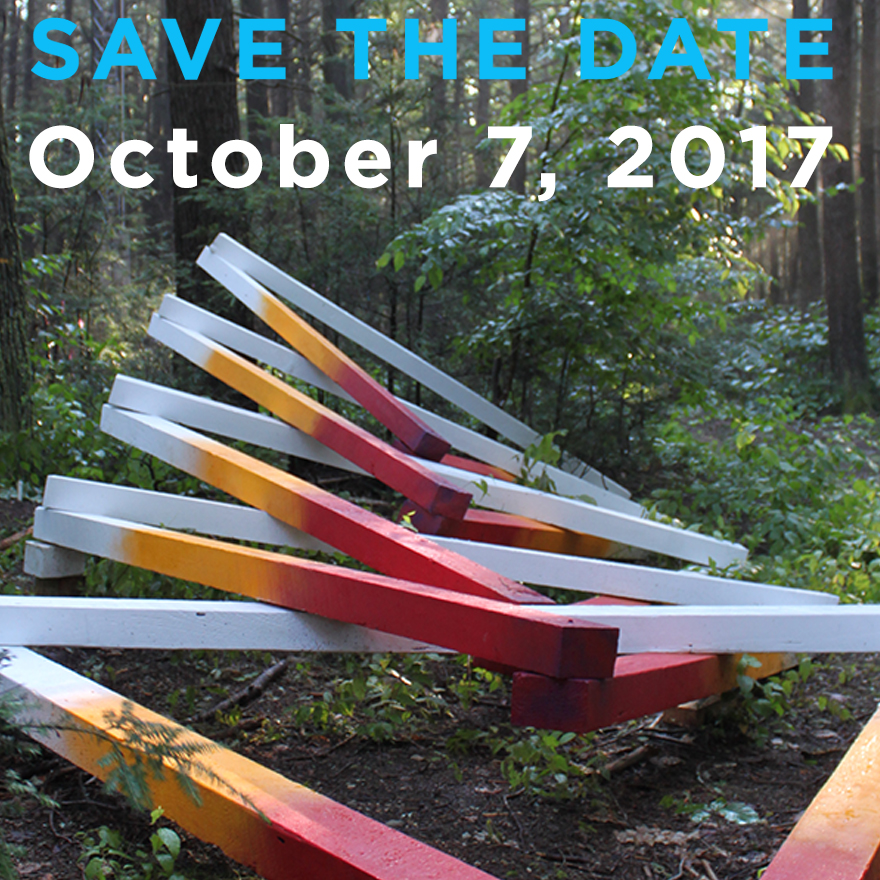
On Saturday Ocotober 7th, from 12 noon until 4 pm, the Harvard Forest will host an opening reception for Harvard Forest Bullard Fellow David Buckley Borden‘s Hemlock Hospice installation on the Prospect Hill Tract and his parallel exhibition in the Fisher Museum.  Save the Date!

In brief: Eastern hemlock (Tsuga canadensis) is slowly vanishing from North American forests as it is weakened and killed by a small insect, the hemlock wooly adelgid (Adelges tsugae). Hemlock Hospice is a collaborative, field-based installation that blends science, art, and design in respecting hemlock and its ecological role as a foundation forest species; promoting an understanding of the adelgid; and encouraging empathetic conversations among all the sustainers of and caregivers for our forests—ecologists and artists, foresters and journalists, naturalists and citizens—while fostering social cohesion around ecological issues. 

Fisher Museum to Screen Documentary

On Friday, June 16 at 6:30pm, the Harvard Forest Fisher Museum will host a public screening of the acclaimed documentary One Big Home, followed by a Q&A with filmmaker Thomas Bena. All are welcome to attend, and no RSVP is required. The film is 90 minutes long.

The film follows one carpenter’s (Bena’s) journey to understand the trend on Martha’s Vineyard (and elsewhere) toward giant houses. Bumping up against angry homeowners and builders who look the other way, he works with his community and attempts to pass a new bylaw to limit house size. 

Study: Wildfire in a Warming Climate Could Relegate Some Forests to Shrubland

The ability of some Western conifer forests to recover after severe fire may become increasingly limited as the climate continues to warm, according to a new study published today in Global Change Biology, by HF Senior Ecologist Jonathan Thompson and fellow scientists from the Smithsonian Conservation Biology Institute (SCBI) and UVA.

Although most of the evergreen trees in the study region are well adapted to fire, the study examined whether two likely facets of climate change — hotter, drier conditions and larger, more frequent and severe wildfires — could potentially transform landscapes from forested to shrub-dominated systems.

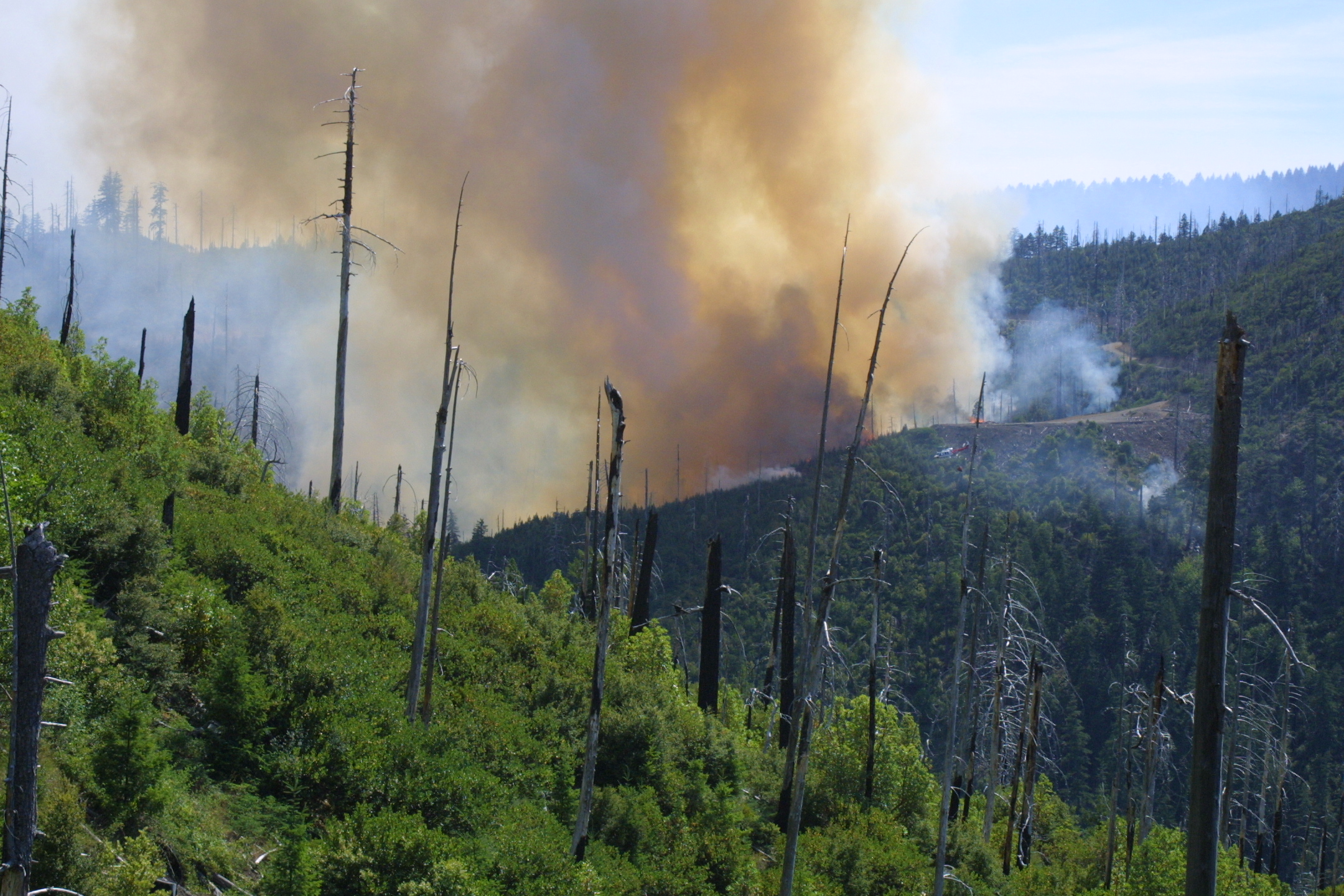
As part of the study, which was funded by the National Science Foundation, scientists examined conifer forests in the richly diverse Klamath region of northern California and southwestern Oregon. The Klamath region is a botanical hotspot, home to 29 species of conifers and a suite of plant species that exist nowhere else on earth.

The researchers sampled sites that burned severely in wildfires between 1987 and 2008. They found that, after fire, hardwood trees and shrubs quickly established by either re-sprouting from surviving root systems or growing rapidly from seeds that persisted in the soil. These plants dominated the vegetation for at least the first few decades after fire. Most conifers, on the other hand, were slow to compete, relying on establishment of new seedlings borne by trees in less severely burned patches or from outside the fire perimeter.

As a result, conifers had only a few years to establish before the regenerating hardwoods and shrubs grew dense enough to suppress them. “If they miss that window there’s much less chance of successful establishment and their growth will be slower,” says study author Kristina Anderson-Teixeira, a forest ecologist at SCBI and the Smithsonian Tropical Research Institute. In fact, the study found that the longer the interval between the fire and the conifer’s establishment, the slower the tree’s growth.

“The Klamath ecosystem is an important transition zone separating the shrubs of the California chaparral from the Pacific Northwest’s temperate rainforest,” says Thompson. “Our work suggests climate change will push the chaparral north at the expense of the Klamath’s existing conifer forests.”

Because most conifers depend on seed dispersal from surviving trees, larger patches of high-severity fire could put a growing portion of the landscape at risk of poor post-fire conifer regeneration. The study suggests this trend could be even more pronounced because under drier conditions more abundant seed sources are needed to support conifer seedlings at densities sufficient for forest recovery. In addition, previous research by Thompson and others suggests the young, shrub-dominated vegetation that develops after severe fire tends to burn more severely in subsequent fires than older conifer forests, meaning that once severe fire converts a conifer forest to a shrub-dominated system, the non-forested vegetation could be perpetuated almost indefinitely through a cycle of repeated burning.

“We see climate change affecting the system from two directions,” says Thompson. “First, it is slowing conifer growth, keeping them low to the ground and more vulnerable to future fires for a longer period of time. Second, climate change is making fire more frequent. This phenomenon, which researchers call the ‘interval squeeze,’ threatens to transform this and other arid, fire-prone forests worldwide.”

Still, portions of the landscape may be relatively resilient. For example, conifers were able to regenerate in wetter sites, even amid relatively large high-severity patches with few surviving trees. “The Klamath region has supported conifers for thousands of years,” says Thompson. “Some patches will surely survive no matter what climate throws at them.”

The researchers hope these findings could help provide information needed to prioritize management efforts. “Our study helps to identify the places that are at greatest risk of forest loss, where managers could either target management to promote post-fire forest recovery, or accept that we’re going to see some degree of landscape transformation in the coming decades and learn to meet ecological objectives under the new climate and disturbance regimes,” says Alan Tepley, a forest ecologist with SCBI and the study’s lead author.

These findings could also be applied in a broader context to other forest ecosystems. “There are concerns for much of the western U.S. and other similar landscapes that under climate change, forests may be less likely to regenerate,” says Anderson-Teixeira. “And that can then reduce forest cover on the landscape and result in big losses of carbon storage.” According to Anderson-Teixeira, the fate of the Klamath region depends in part on societal carbon emissions, where increased emissions lead to more warming, which ultimately could result in more forest loss.

The study is part of a large collaborative effort that includes the US Forest Service and Portland State University.

(Photo of the 2002 Biscuit Fire reburning the area of the 1987 Silver Fire in the Klamath region, by Thomas Link)

New Study Links Hemlock Decline to Shifts in Water Resources

Each year in New England, tree-killing insect pests cause sweeping changes in forests. Some changes are highly visible – like swaths of dead trees. A new Harvard Forest study points to a less visible but still critical impact: changes to freshwater streams, including streams that source public water supplies.

According to the study, recently published in the journal Geophysical Research Letters, the widespread, insect-induced death of hemlock trees in central Massachusetts has actually increased the amount of water coursing through forest streams – a boost of about 15 percent. The study monitored two stream systems over ten years: one flowing into the Quabbin Reservoir, metro Boston’s public water supply, and the other running to the Connecticut River.

“People are often surprised to learn that trees help to control forest stream flow,” says Emery Boose, co-author of the study and Information Manager at Harvard Forest, where the research was conducted. “The more water trees use for photosynthesis, the less water you’ll find in the streams.”

For nearly two decades, hemlock trees in Massachusetts, which make up anywhere from 10 percent to 60 percent of a forest’s live trees, depending on the location, have become increasingly infested with the invasive hemlock woolly adelgid, an aphid-like insect imported from Japan that slowly kills trees over time. Since the 1950s, the insect has killed millions of hemlock trees across the eastern seabord.

At the Harvard Forest, experiments and long-term monitoring supported by the National Science Foundation’s Long-Term Ecological Research Program have allowed scientists to track the impacts of the adelgid in every aspect of the woods, and to predict what’s coming next.

“The dying hemlocks are producing less food, using less water, and therefore evaporating less water back to the atmosphere, leaving more water available in streams,” says David Orwig, Forest Ecologist at Harvard Forest and a co-author on the study.

But like most environmental change, this effect is not likely to stay the same for long.

Orwig points out that another major shift may be on its way. Hemlock trees, with their evergreen needles, are relatively efficient water users. As hemlocks die, birch trees often grow to replace them. Birches use far more water, especially during the height of the growing season.

“We already see birch seedlings becoming established underneath the dying hemlocks, and if these hardwood trees replace the hemlocks, they may lead to drier conditions and less water in the streams, particularly in mid-summer,” explains Orwig.

The replacement of hemlock by birch will cause other changes, Orwig adds, including a loss of the dense shade and the cooling effect hemlocks have on streams that support cold-water fish like trout. There are also short-term but major increases to the amount of carbon dioxide released by a dying forest. At Harvard Forest, research towers standing in a large patch of hemlocks have tracked these changes since 2000, in research led by Bill Munger at Harvard’s John A. Paulson School of Engineering and Applied Sciences, who also co-authored the water yield study. Additional co-authors on the study came from the University of Massachusetts-Boston, Boston University, and Indiana University-Bloomington.

“It is interesting to think that an insect, barely visible to the naked eye, can not only take down an entire forest of trees, but in the process have profound effects on the ecology and hydrology of the whole system, even affecting water supplies,” says Orwig.

2017-2018 Bullard Fellows Announced

We are pleased to announce the Harvard Forest Charles Bullard Fellows for 2017-2018. The mission of the Charles Bullard Fellowship Program is to support advanced research and study by individuals who show promise of making an important contribution–either as scholars or administrators–to forestry and forest-related subjects, from biology to earth sciences, economics, politics, administration, law, and the arts and humanities. 

FELLOW INSTITUTION RESEARCH AREA
Noah Charney University of Arizona New book that explores the ecological and historical narratives of richly storied field sites
Isabelle Chuine Centre d’Ecologie Fonctionnelle & Evolutive (France) Modeling phenology and ecological niches of forest trees
Guillermo Goldstein University of Miami Tree physiology: survival of living tissue in subzero temperatures
Nicole St. Clair Knobloch Build It With Wood program,
New England Forestry Foundation
Innovative conservation finance in three distinct regions of Massachusetts
Maureen Puettmann WoodLife Environmental Consultants Life cycle analysis of the environmental impacts of HF’s new wood heating system
Crystal Schaaf University of Massachusetts, Boston Combining remote sensing and forestry field data to investigate Northeastern forest canopy changes due to hemlock woolly adelgid
Eric Washburn Windward Strategies New book that focuses on future stresses and drivers of change in U.S. forests

Browse highlights of recent Bullard Fellows:

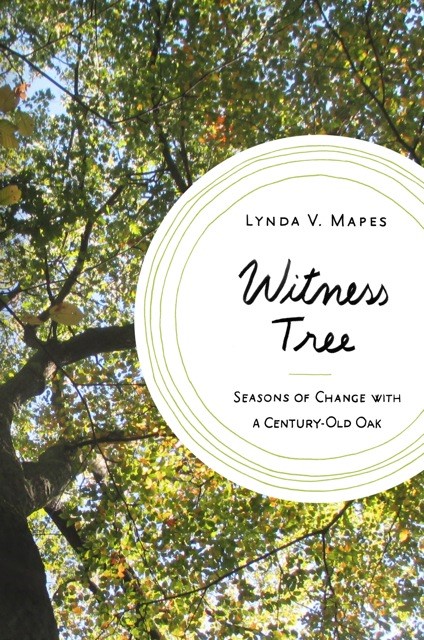
Museum Event to Launch New Book: Witness Tree

Near the edge of the Harvard Forest stands a stately red oak tree that, if you listen closely, tells a rich, 100-year story of human and environmental change. Veteran Seattle Times reporter Lynda Mapes studied the tree and its environs intently for a year during a recent Bullard Fellowship. The result is her new book, Witness Tree, which Mapes will present to the public at the Fisher Museum on Tuesday, May 2 at 7:00 p.m.

Mapes’ storytelling, based on interviews with dozens of scientists, historians, tradesmen, and others, creates a rich picture of the many ecological, climatic, and cultural changes that have shaped the landscape around the tree in its 100 years of life.

The book, released this month by Bloomsbury Publishing, has already received praise from a great many writers, historians, and scientists. Ecologist and writer Tom Wessels describes Mapes’ work: “The real witness in Witness Tree is Lynda Mapes, who during a year at the Harvard Forest meets a cadre of people who are unraveling the forest’s wonderful secrets and how those are being impacted by climate change. This rich, engaging book should be in the hands of anyone interested in forests and the amazing stories they have to tell.”

Mapes will also present the book at 6 Bridges Gallery (with a presentation by HF Senior Ecologist Neil Pederson) in Maynard on Thursday, May 4 at 7:00 p.m., and at the Arnold Arboretum in Boston on Friday, May 5 at 6:00 p.m.

  • Watch a news story about the book:

Field Trip Scholarships for Middle & High School Classrooms

Scholarships are now available for educators wishing to bring middle and high school classes for a guided field trip to explore the forest and Fisher Museum, and to collect data as part of an authentic ecological field study. 

Field trips are available in two locations: the Harvard Forest in central Massachusetts or Highstead in southern Connecticut.

A limited number of scholarships are available for both spring and fall 2017. Preference is given to schools with a high percentage of students receiving free or reduced lunch. The scholarship covers on-site student data collection materials and the tour fee. Reimbursement for busing is also available.

Support from the Highstead Foundation allows us to provide these field trips cost-free to groups wanting to learn more about forest dynamics and the value of New England’s forests.

Field trip scholarship recipients are encouraged to consider becoming part of the year-round Harvard Forest Schoolyard Ecology Program, supported by the National Science Foundation’s Long-Term Ecological Research Program, which supports schools in collecting data in their schoolyards. The field data collected as part of the scholarship field trip to Harvard Forest or Highstead is the same as that done in the Schoolyard Program’s “Our Changing Forests” project.

Open Studio to Feature Sci-Art Collaboration

On Saturday, April 29, artist and designer David Buckley Borden, a 2016-2017 Bullard Fellow and Harvard GSD alumnus, will host an open studio at the Harvard Forest for students and the public to explore his ongoing work.

The open studio will run from 12:00-4:00pm. 

Borden’s year-long collaboration with Harvard Forest scientists will ultimately culminate in a multi-disciplinary, immersive exhibition in fall 2017, featuring silkscreen prints, mixed media drawings, sculptures, and installations in the Fisher Museum and the surrounding landscape. In support of the exhibition, Borden will create several smaller installations throughout greater Boston. 

Visitors to the open studio should park in the main Harvard Forest lot and visit the Fisher Museum for easy walking directions to Borden’s studio on Prospect Hill Road.