Learning from an Island: Harvard Students Explore Vineyard Ecosystems

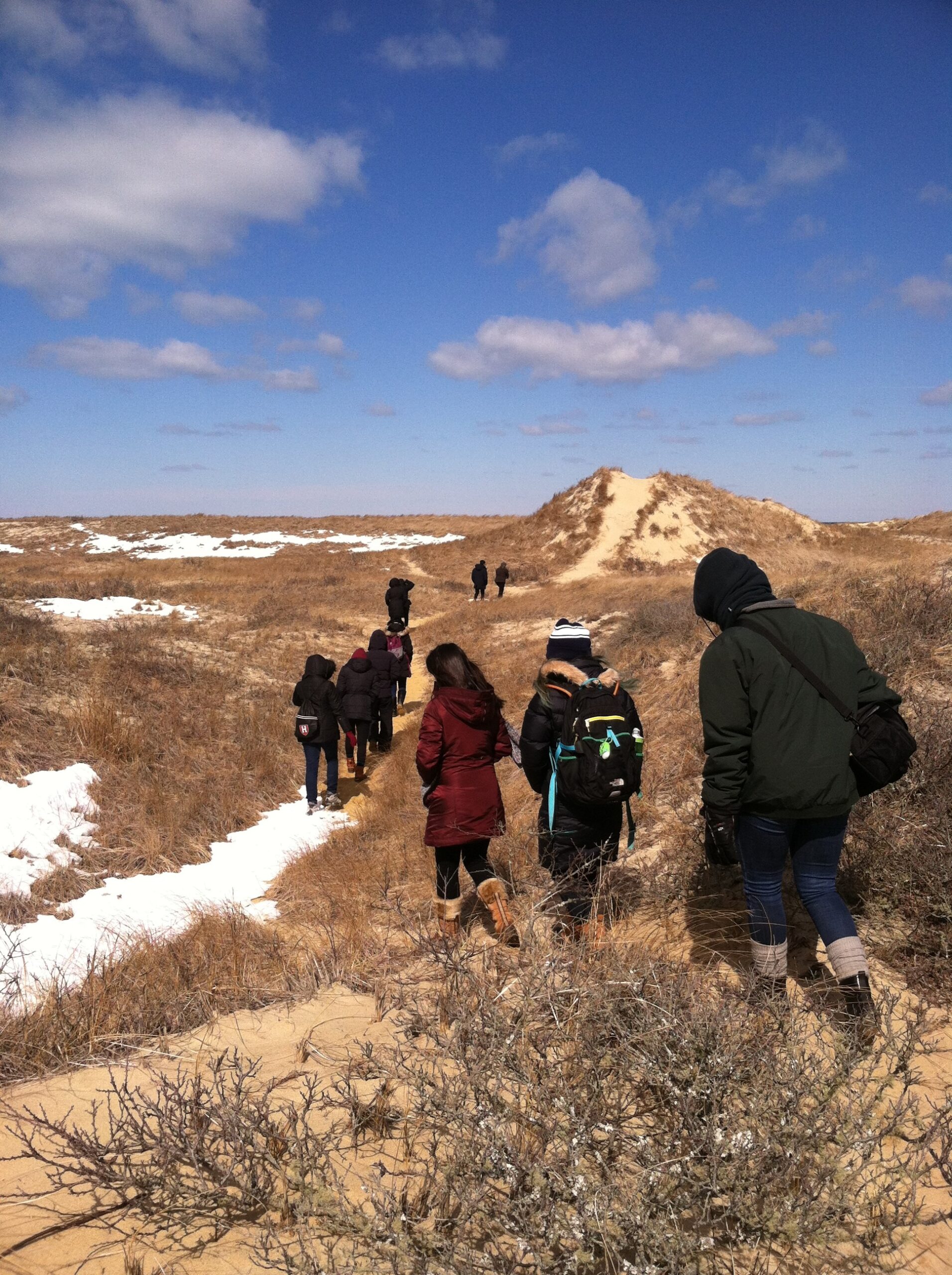
A lucky group of Harvard students spent 5 days on Martha’s Vineyard during Spring Break with HF Director David Foster, exploring the Island’s history, culture, and ecosystems. Foster has been studying the Island for decades, and recently published a book and series of maps about the Island, around which the program was based.

The focus of the trip was to introduce students to the Island’s diverse ecosystems and the many human and natural factors that have shaped them over time. 

In addition to guided hikes through a variety of conservation lands and beaches, students participated in an Island-wide Grazing and Conservation workshop organized by Foster; toured the Goodale Construction Company’s decades-old mining pit with owner Peter Goodale; met just-born lambs and saw farm education in action with general manager Jon Previant at The Farm Institute of The Trustees of Reservations; toured the Gay Head Art Gallery and Aquinnah beaches with gallery director Megan Ottens-Sargent; toured a traditional fishing area and research lab with the Wampanoag Tribe of Gay Head’s Director of Natural Resources, Bret Stearns; explored the rich cultural history and old railroad trail of Oak Bluffs and Katama with longtime resident Fritz Knight; got a behind-the-scenes tour of the Vineyard Gazette newsroom, archive, and printing presses with writer Tom Dunlop, librarian Hilary Walls, publisher Jane Seagrave, and editor Julia Wells; and attended a private screening of the award-winning documentary One Big Home, with a Q&A with filmmaker Thomas Bena as well as Steve Bernier, activist and owner of Cronig’s Market, the Vineyard’s “100-year-old local grocer.”

The program was made possible by funds from the Harvard Faculty of Arts & Sciences.

The students will return to Harvard Forest later in the spring to explore the links between the ecosystem research we conduct on Martha’s Vineyard and the research we conduct here at the Harvard Forest and on Harvard Farm.

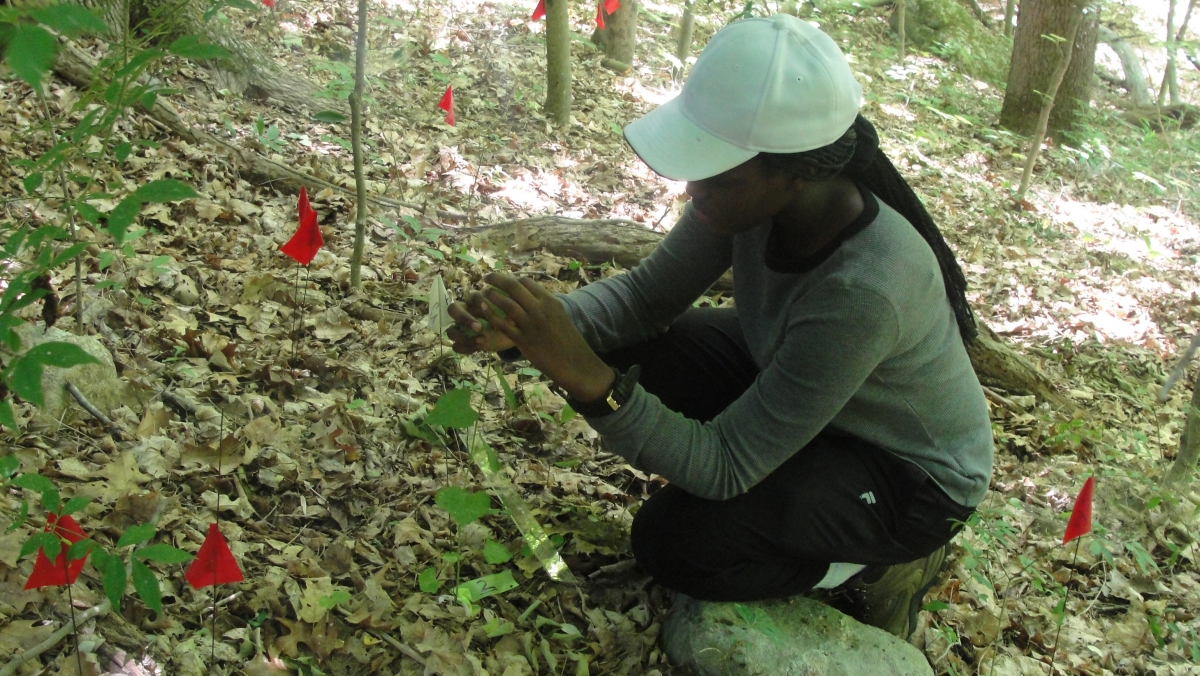
(Photo of students in the Aquinnah dunes by Clarisse Hart)
Keystone Project Honored for Outstanding Environmental Education

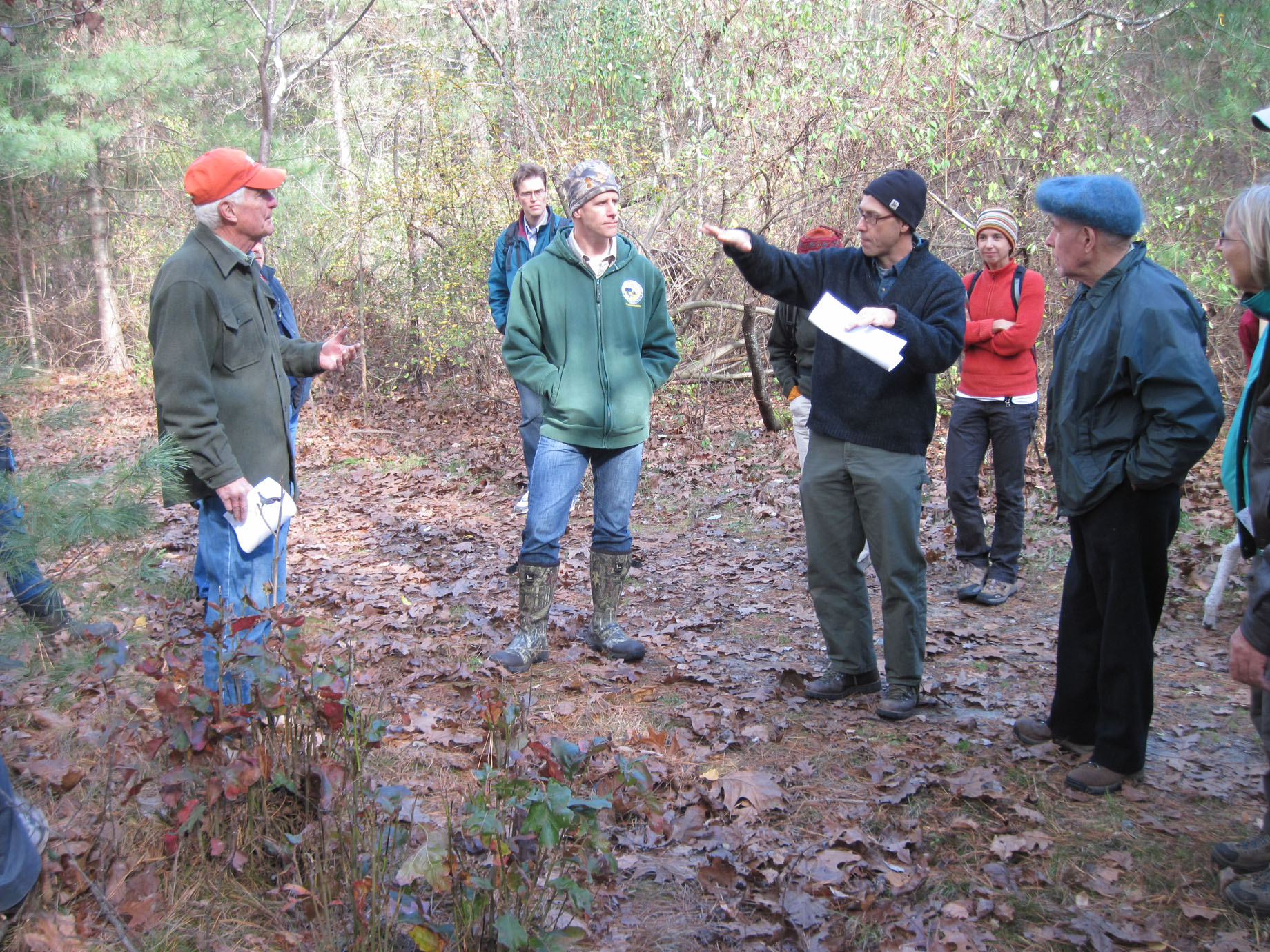
The Massachusetts Keystone Project, led by UMass Extension since 1988 and involving a 3-day training workshop at Harvard Forest every April, has been awarded a prestigious Environmental Service Award by the Mass. Association of Conservation Commissions. The award, given for Outstanding Environmental Education, is well-deserved; since 1988, Keystone Project leaders David Kittredge and Paul Catanzaro have led 26 training workshops, with over 500 Massachusetts community members participating as Keystone Cooperators.

Cooperators are expected to volunteer a minimum of 30 hours after the training workshop to advance conservation at the local level.

Recent evaluations show that in a one-year period, Keystone Cooperators made contact with 15,033 people about forest conservation, and 1,742 referrals to conservation information resources. Keystone Cooperators contributed 44,636 hours to conservation-related activities, 63% of which were volunteer hours. This is equivalent of more than 22 full-time conservation positions, of which nearly 14 positions were volunteer.

2017 Harvard Forest Ecology Symposium

The 28th annual Harvard Forest Ecology Symposium will be held Tuesday, March 21 from 9:00 am to 5:30 pm in the newly reopened Harvard Forest Fisher Museum. We are at full capacity, and registration is closed. However, you can join us online from anywhere; the event will be live-streamed online. 

  • Registration is closed. We are at capacity for our Museum space.

Presentations this year will focus on new perspectives for the Harvard Forest Long-Term Ecological Research (LTER) program, including talks by both early-career researchers and senior ecologists, and audience discussion sessions on key themes.

Please note:

  • LTER graduate students and post-doctoral fellows attending the Symposium are invited to dinner following the event. Email hart3@fas.harvard.edu to RSVP. 
  • The Fisher Museum is in the midst of renovations. The space will be clean and functional on March 21, and we’re on schedule to be painting the space the week prior to the symposium. We use low VOC paint, but are aware that this may be a consideration for people with chemical sensitivities.

New Study: Nitrogen Pollution Hinders Forest Decomposers

Atmospheric pollution may be altering forest ecosystems in ways that are difficult to reverse, according to a study of experimental Harvard Forest soils recently published in the journal Ecology, led by a team of HF collaborators from the University of New Hampshire, University of Wyoming, and University of Wisconsin-Madison.

The study is the first to investigate a three-part domino-effect: long-term exposure to pollution causes organisms to evolve, altering their growth habits and functions, in turn altering the ecosystem processes that those organisms control. 

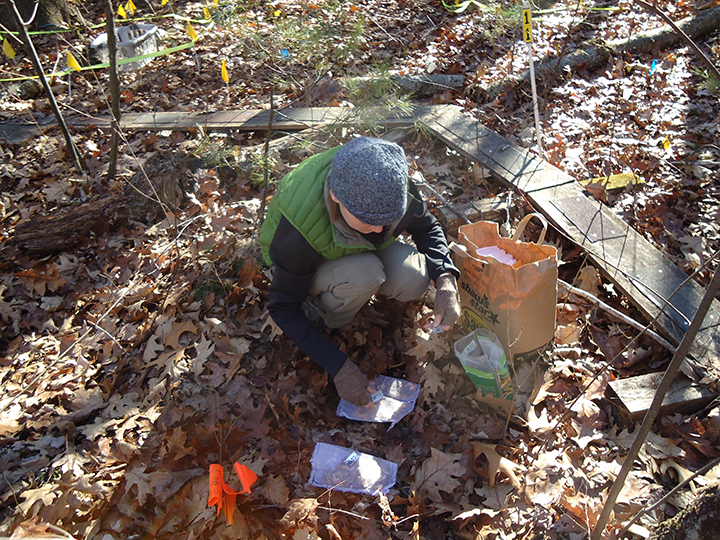
A researchers crouches on the forest floor picking up dead leaves
Linda van Diepen collecting leaf litter and associated fungi from the nitrogen pollution experiment at Harvard Forest. Photo by Serita Frey.

The team focused their study on a group of tiny organisms with a disproportionately large impact on the ecosystem: soil fungi. “They are the recyclers of the ecosystem—the primary decomposers of wood, leaves, and other plant material,” said Serita Frey, Professor of Natural Resources and the Environmental at the University of New Hampshire, a lead author on the study and a co-investigator on the Harvard Forest Long-Term Ecological Research project. Without them, Frey said, dead material would not be broken down: “We would be buried in leaves and wood, and no new nutrients would be made available for plants to use.”

Soil fungi are sensitive to environmental stress, and they evolve quickly in new conditions. In the lab, the team analyzed soil fungi samples, half reared in petri dishes polluted with nitrogen as an environmental stressor.

But there was a twist. Some of the fungi samples were polluted to begin with – collected from a long-term study area at the Harvard Forest, where for the past 28 years, nitrogen had been added to simulate chronic industrial pollution.

After 14 weeks in the lab, the scientists were surprised to find that fungi samples with a long history of pollution behaved differently than those from unpolluted soil: the polluted samples were stymied in their ability to perform decomposition, their primary function in the ecosystem. “The fungi from polluted plots had evolved,” said Frey. “They weren’t decomposing as much plant material as the same species collected from a less polluted area. Something about the organism had changed in a fundamental way.”

What’s more, even when grown in an unpolluted petri dish, fungi from polluted areas weren’t able to match the decomposition function of their neighbors from cleaner soils.

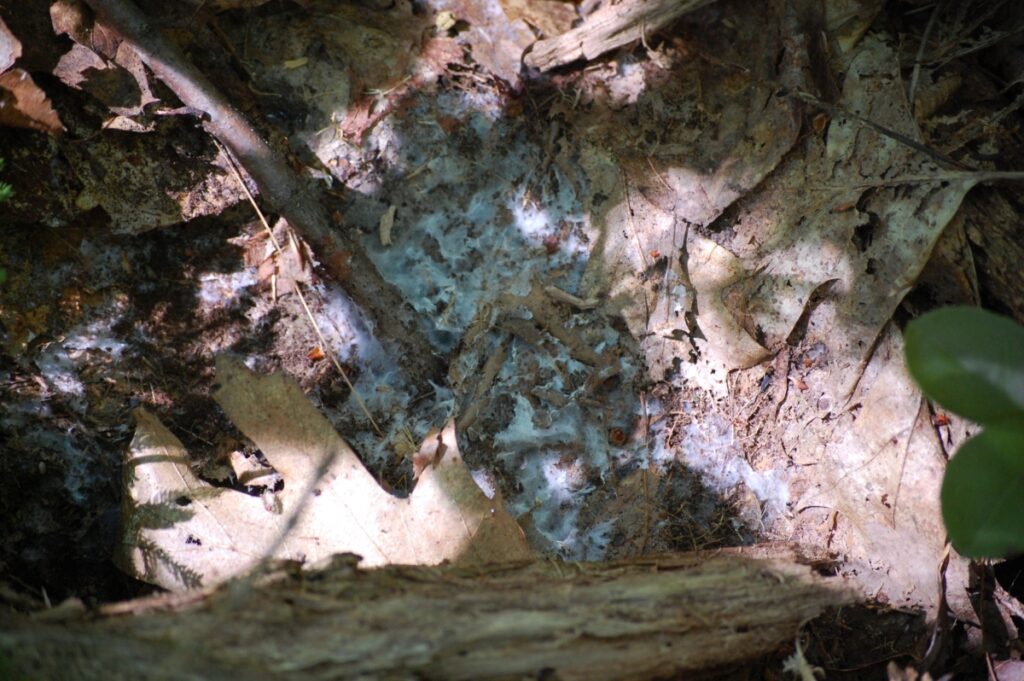
White fuzzy fungi growing on leaf litter on the forest floor
Fungi (white fuzzy material) growing on leaf litter on the forest floor at Harvard Forest. Photo by Serita Frey.

Some species of fungi were more sensitive than others—particularly a species called Irpex, which decomposed up to 44 percent less plant material after being polluted long-term. This fungus is from a subset of fungi that decompose wood. “Only a small subset of fungi can actually decompose wood,” said Frey. “It’s troubling to see this group so affected.”

Because decomposition is central to ecosystem function, the scientists say, a critical next question is determining whether, and how, fungal communities can recover after long-term nitrogen pollution. Nitrogen pollution deposited on Earth’s ecosystems from the atmosphere has increased 200 percent since the beginning of the Industrial Revolution. Anne Pringle, Associate Professor of Botany and Bacteriology at the University of Wisconsin-Madison and a co-author on the study, added, “As long as nitrogen pollution continues to be a feature of our rapidly changing world, the evolution of fungi will likely shape how ecosystems function.” 

AP News: Forests at Risk from Insects Spread by Trade & Climate

An Associated Press feature this week about the risks and impacts of invasive tree pests highlights a recent study by the Science Policy Exchange and features HF Forest Ecologist Dave Orwig, who has studied hemlock woolly adelgid and other invasive insects in New England for decades. 

The story has been picked up by at least 200 outlets around the country, including the New York Times and Wall Street Journal.

Forest pests are an ongoing concern for communities, timber-owners, and our nation’s forests and trees. The Science Policy Exchange, led by Kathy Fallon Lambert and Marissa Weiss at the Harvard Forest, is continuing to use science to advance solutions, by calling for Tree-SMART Trade, a set of high-priority actions addressing the most common pathways through which pests are spread.

Applications Open: Summer Research Program for Undergraduates

Update: Applications are closed (as of Feb. 3).

Applications are now open for the 2017 Harvard Forest Summer Research Program, an opportunity for college and university students across the U.S. to participate in 11 weeks (May 22-August 4, 2017) of paid, independent research with mentors from Harvard and other leading institutions.

2017 research projects cover many academic disciplines, including ecology, biogeochemistry, art/design, computer science, conservation policy, history, and engineering.

Research topics include the ecological dimensions of changing forest systems, the development of new systems and sensors for monitoring that change, investigating the impacts of regional forest conservation, and measuring the shifting dynamics of agricultural systems.

Depending on the project, students will conduct field and labwork in old-growth forests, historical archives, art/design studios, biogeochemistry labs, forest study plots that simulate 50 years of climate change; in data-rich computer environments; on research towers; and at Harvard Farm and Henry David Thoreau’s cabin site at Walden.

Participants are housed on-site and, in addition to their research, attend career panels, evening workshops and seminars, and field trips. At the conclusion of the summer, they present their research at a final symposium.

Undergraduate students from all majors are encouraged to apply (deadline: February 3, 2017).

Fisher Museum to Close for Renovations; Archive Seeks Pre-1970s Photos

The Harvard Forest Fisher Museum, free and open to the public since 1941, will close for renovations on October 31, 2016, and reopen in April 2017.

The Museum’s 23 diorama models will be protected and remain unchanged during the renovation, which will primarily focus on the Museum’s entryways, flooring, lighting, and auditorium space. Harvard Forest’s interpretive trails will remain open during the renovations.

The newly renovated Museum will include an exhibit on the history of the Fisher Museum and the making of the dioramas. But there is a gap in our archival records of the space.

“Those who have been visiting the Fisher Museum for decades may remember the way the Museum looked before it was renovated in the 1970s,” says David Foster, Director of the Forest since 1983. “It had high ceilings and an upper gallery with displays and windows that allowed natural light to stream down from above. We welcome stories from local residents of their memories of the Museum, including any photographs or news clippings related to those years before 1970.” These can be directed to Clarisse Hart, Outreach Manager, at hart3@fas.harvard.edu or 978-756-6157, for consideration for the Archive.

An auditorium was placed in the center of the Museum in the 1970s—and is now home to an increasing number of workshops, public events, and symposia. Many agencies and organizations, including the Mount Grace Land Conservation Trust and the Mass. Department of Conservation & Recreation, hold annual meetings in the space. More than 5,000 people annually visit the Fisher Museum, including local schoolchildren and families, university students, and groups of foresters, policymakers, conservationists, and scientists from every continent.

The 23 dioramas portray 200 years of landscape change in Central New England, and meticulously illustrate forest management practices from the early twentieth century. They figure into countless publications, books, and educational materials around the world.

The dioramas were created in the 1930s by the Guernsey and Pitman studio in Cambridge, Mass. According to Time Magazine, they were the most celebrated exhibit at Harvard University’s Tercentenary in 1936, when over 100,000 people viewed them on display in Cambridge. The dioramas moved to Petersham in 1941; the brick building where they are found was built specifically to house them.

One diorama depicts Harvard Pond, a well-known landscape in Petersham, and includes a figurine of the Forest’s founding director, Richard Fisher, for whom the Museum was named.

The building renovations, funded by the Harvard University Faculty of Arts and Sciences and overseen by Roland Meunier of the Harvard Forest Woods Crew, will be partly completed in-house and, as is typical for Harvard Forest, partly contracted to local businesses. 

New Study: Climate Warming Destabilizes Forest Ant Communities

A study published today in Science Advances, co-authored by HF Senior Ecologist Aaron Ellison with scientists from six other institutions, shows that climate warming disrupts forest ant communities responsible for important soil turnover and seed dispersal processes.

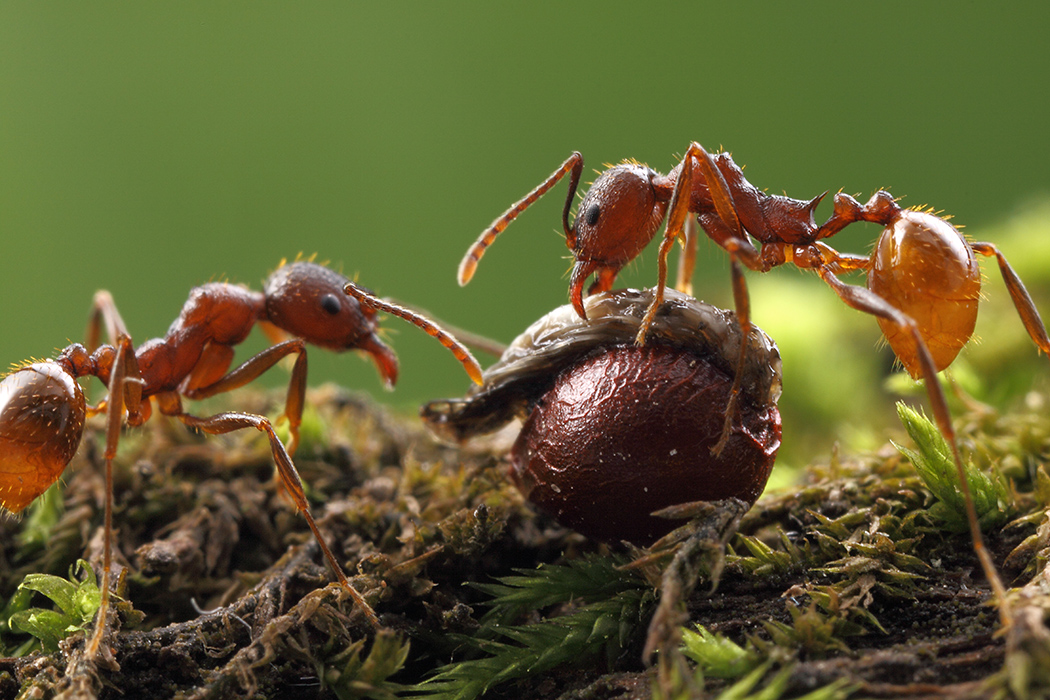
In a five-year experiment conducted at both the Harvard Forest and Duke Forest in North Carolina, high-walled chambers in the forest were consistently warmed an additional 1.5 to 5.5 degrees Celsius throughout the year. Gaps in the bottom of the chambers allowed crawling insects to migrate in and out. In unheated chambers, colonies of different ant species regularly came and went. But warming increased the occupancy of nests by heat-loving species, which stayed in nests for longer periods of time, diminishing turnover and likely altering species dynamics.

The study was funded by the US Department of Energy Program for Ecosystem Research and the National Science Foundation.

(Photo of Aphaenogaster rudis ants with bloodroot seed by Alex Wild)

Senior Ecologist Calls on Scientists in Op-Ed: If Not Us, Who?

In a new WorldView column in the journal Nature, HF Senior Ecologist Aaron Ellison outlines steps for scientists to go beyond collecting data and to take a more active role in preserving biodiversity.

The call is one echoed and answered by many researchers at the Forest; projects like the Science Policy Exchange and Wildlands & Woodlands serve as a model for the integration of science, policy, and conservation.

Ellison is currently traveling on sabbatical. You can learn more about his research online, or follow his travels and ideas on his blog.

HF Forest Policy Analyst Honored with Int'l Award

The International Union of Forest Research Organizations (IUFRO) Small Scale Forestry group recently honored HF Forest Policy Analyst David Kittredge with the 2016 Brandl Award in recognition of his outstanding contributions to the field of small-scale forestry research.

Kittredge has served as a forester on the faculty in the Department of Environmental Conservation at the University of Massachusetts Amherst since 1987. At Harvard Forest, he provides management, policy, and social science perspectives to a host of long-term ecological research projects. He also co-directs the Family Forest Research Center (FFRC), a national joint venture between UMass and the USDA Forest Service, whose mission is to study the attitudes and behaviors of family forest owners.

Kittredge’s ground-breaking work with family forest owners is vital because, collectively, family forest owners own and manage more of the nation’s forestland than industry or government (family forests comprise 36% – or 263 million acres – of the nation’s total forestland). The research is also challenging: small-scale forests often span multiple ownerships and involve not only the natural variety of trees, plants, and animals, but a host of social factors including economics, sociology, psychology, and history. 

The Brandl Award was first given by IUFRO in 2008, and named for Professor Dr. Helmut Brandl, a founder of the IUFRO Small-scale Forestry group and a leading scholar of private forest policy in Germany. IUFRO is the global network for forest science cooperation, uniting more than 15,000 scientists in almost 700 Member Organizations in over 110 countries. 

New Grant to Study How Climate & Forest Pests Drive Landowner Decisions

A team of researchers from the Harvard Forest, Family Forest Research Center, and Duke University have been awarded an $880,000 grant from the National Science Foundation to study how climate change and forest pests influence the ways landowners make decisions about their woods.

Collaborators David Kittredge, Marla Lindsay, Mark Borsuk, Brett Butler, and Emily Silver-Huff plan to survey thousands of landowners throughout New England to better understand how their forest management decisions are affected by climate-induced policies like carbon credits and wood biomass markets, as well as pest-induced economic opportunities like harvesting trees and utilizing insect-damaged wood.

Harvard Forest senior ecologists Jonathan Thompson and David Orwig will use the survey information to model the potential impacts of these decisions on the forest landscape’s composition and function. The model’s outputs will be integrated into decision support tools for landowners – a resource for them to use when contemplating the future of their land in the face of ongoing change.

(Photo by David Foster)

Museum Event to Feature Hurricane of 1938

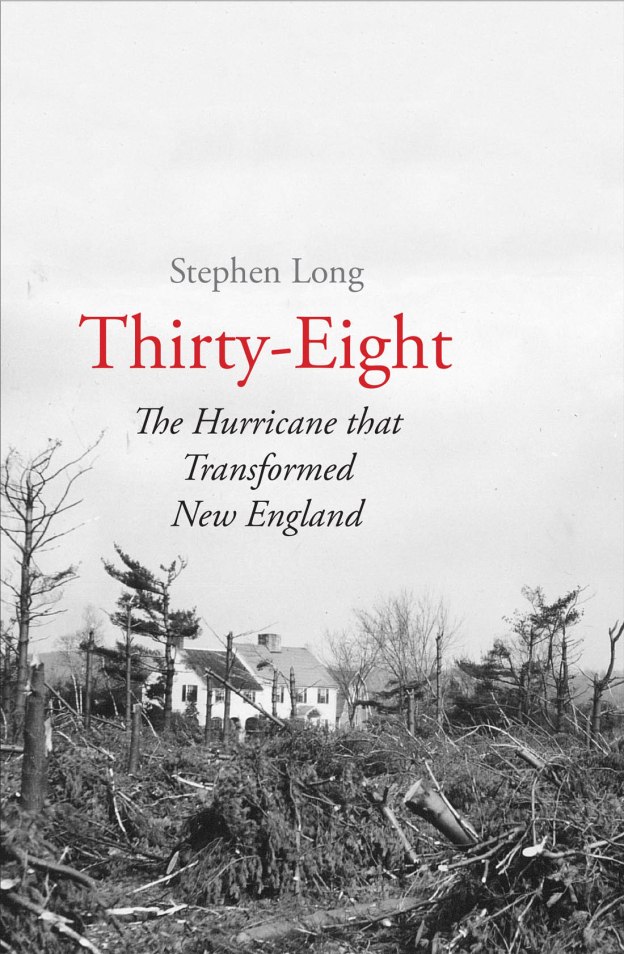
On Tuesday, September 20 at 7:00pm, the Fisher Museum will host a presentation by Steve Long, former Harvard Forest Bullard Fellow, as he releases the culmination of his work at the Forest: the new book Thirty-Eight: The Hurricane that Transformed New England (Yale University Press).

In Thirty-Eight, Long chronicles how the Hurricane of ’38 transformed New England, bringing about social and ecological changes that can still be observed these many decades later. His presentation will cover the impact of the storm on different New England states, describe how it compares to more modern storms, share some of the many stories gleaned from interviews with survivors, and give tips for preparing for the inevitable next great storm.

After the presentation, which takes place on the eve of the storm’s 78th anniversary, Long will sign books in the Museum.

All are welcome. Light refreshments will be served.