Harvard Forest Code of Conduct
Harvard Forest is committed to fostering a respectful, open, and inclusive community that supports and implements our mission: to address environmental challenges through excellence in science, education, and engagement with society to help guide stewardship of the planet.
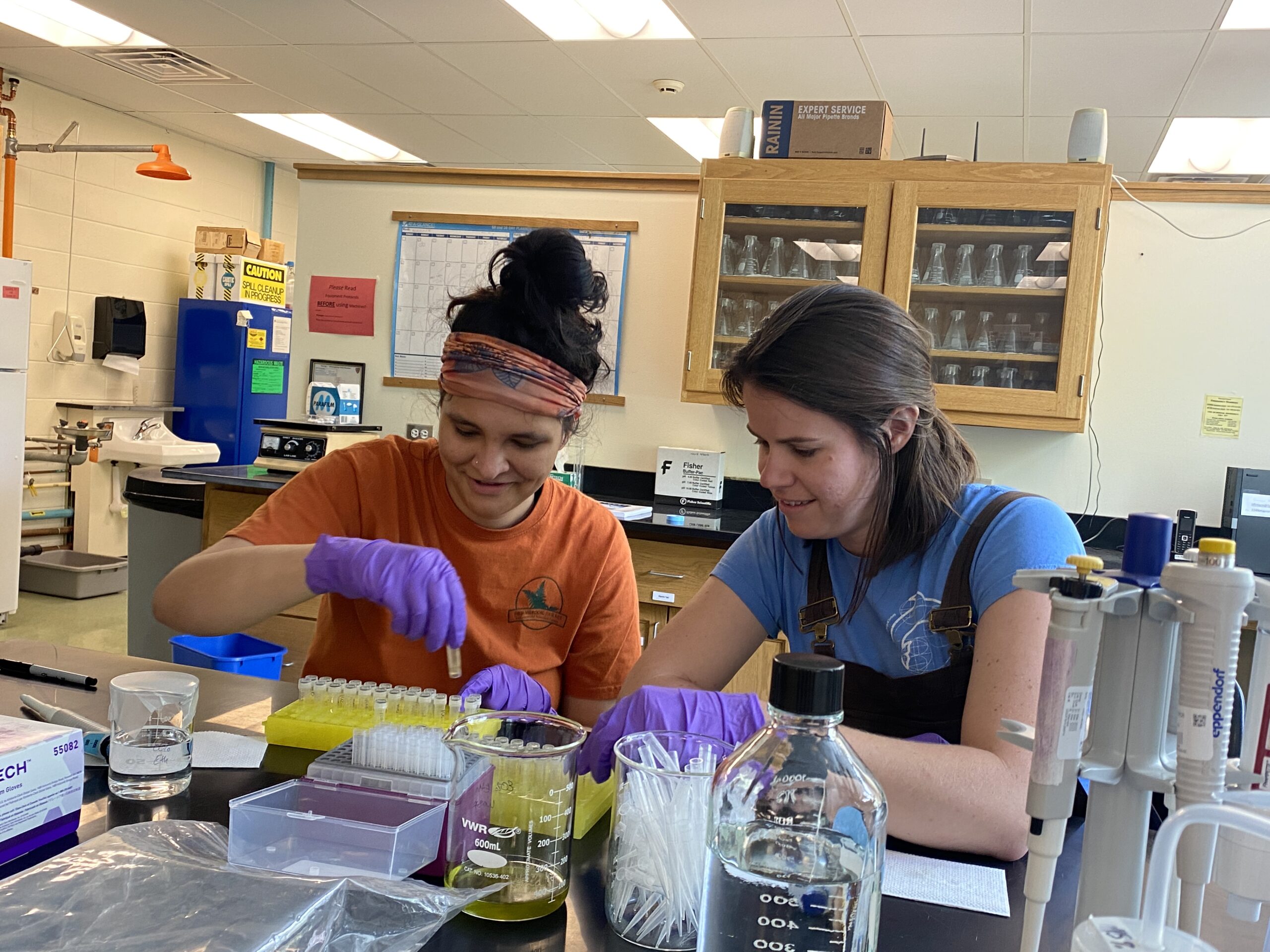
This code was developed in a collaborative, staff community process in 2021-2022. It is reviewed annually and was most recently updated in January 2025.
All members of the Harvard Forest community are expected to adhere to high standards of civility, integrity, and inclusion while on-site and while carrying out our work in the wider world. Federal and state laws and various university policies create a framework for our expectations, which apply not only to staff, students, faculty, and fellows, but also to visitors, contractors, and guests.
Beyond this framework, our role as a diverse community calls us each to show, expect, and hold each other accountable for growth in, compassion, patience, empathy, courage, and learning as we understand and embrace our differences. We are all responsible for holding our community to high standards of conduct. In addition to following all applicable Harvard University policies (see Appendix below and any other applicable policy given the situation at hand), we ask all members of the Harvard Forest community to uphold the core values of Harvard Forest, including Diversity and Inclusion, Collaboration, and Stewardship.
For definitions and more in-depth information, follow the hyperlinks.
Harvard Forest expects members of its community to:
-
- Carefully manage public, private, and confidential information.
-
- Act with integrity, respect, and empathy toward others and the land;
-
- Be welcoming and inclusive of all people;
-
- Practice open and accessible communication to support each community member’s ability to contribute to Harvard Forest’s mission;
-
- When acting in a supervisor, mentor, or other leadership role, individuals should act with the knowledge of the power dynamics that may be inherent in these roles, and participate in relevant learning opportunities;
-
- Be mindful of how one’s actions impact the future, and contribute to the stewardship of the land and University property;
-
- Promote physical and mental health and safety for yourself and others;
-
- Avoid conflicts of interest and commitment (see Glossary below); and
-
- Carefully manage public, private, and confidential information.
While it is impossible to identify all of the ways someone may engage in unacceptable behavior, below is a non-exhaustive list of examples of unacceptable behavior for which Harvard Forest will take disciplinary action:
-
- Any other behavior Harvard Forest determines, in its sole discretion, to be inconsistent with its community expectations or mission.
* See Glossary of Terms below for definition
-
- Sexual harassment, sexual assault, stalking, and relationship violence;
-
- Discrimination* based on any category protected by Federal or Massachusetts law;
-
- Retaliation*;
-
- Incivility*;
-
- Bullying*;
-
- Scholastic dishonesty, including unethical research, plagiarism, or falsification of data;
-
- Unauthorized use, including misuse, of Harvard land, facilities, equipment, or services;
-
- Illegal or unauthorized possession, use, or sharing of weapons, drugs, alcohol, or other illicit materials;
-
- Theft, property damage, or vandalism;
-
- Violation of any applicable Harvard University rules, policies, or established practices;
-
- Violation of any Local, State, or Federal laws; or
-
- Any other behavior Harvard Forest determines, in its sole discretion, to be inconsistent with its community expectations or mission.
* See Glossary of Terms below for definition
Consequences for engaging in unacceptable behavior will depend on the individual’s role in the community and will be commensurate with the nature and severity of the offense, the individual’s history of unacceptable behavior and whether violations have been persistent, and the impact of the offense on any other people involved. The Director and/or Director of Administration and Facilities will be involved in determining consequences, along with others as appropriate. Consequences may include but are not limited to one or more of the following:
-
- Conversation/coaching and education around the unacceptable behavior and expectations for improvement;
-
- Restitution*;
-
- Reassignment;
-
- Confiscation of goods or other property possessed, used, or shared illegally or in an unauthorized manner;
-
- Temporary suspension or permanent expulsion from Harvard Forest, its facilities (e.g., buildings), or its equipment (e.g., vehicles);
-
- Temporary suspension or permanent expulsion from all Harvard University properties;
-
- Performance counseling, performance improvement plan, warnings or other disciplinary notices, and termination of employment are potential consequences for Harvard Forest employees
-
- If external to Harvard, termination of formal affiliation with Harvard University/Harvard Forest; or
-
- Any other consequence Harvard deems appropriate, in its sole discretion, given the circumstances.
-
- In administering discipline, to the maximum extent permitted, there is no particular order or requirement, and certain offenses may lead to more significant consequences, without the need for implementing lesser consequences.
Harvard Forest is learning more about models of restorative justice during the 2023-2024 academic year in the hopes of including it as an option for addressing misconduct in the future.
* See Glossary of Terms below for definition
What to do if you’ve experienced or witnessed misconduct
If you believe you have experienced or witnessed misconduct, we are here to help connect you and the impacted person to care and resources. You can reach out to any or all of the following:
Local Harvard Forest resources
- Jeffrey Carmichael*, Director of Administration and Finance at Harvard Forest (jeffrey_carmichael@fas.harvard.edu; 978-756-6124; Shaler Hall first floor office)
- Jonathan Thompson*, Director of Harvard Forest (jthomps@fas.harvard.edu)
- Your supervisor/program leader/course instructor*
*All of these individuals must report sexual/gender-based misconduct to the Gender Equity office
You can also use the Harvard Forest anonymous reporting form (content goes to Jeffrey Carmichael and Jonathan Thompson).
Additional resources:
These entities are NOT required to report to Gender Equity/Title IX office and will not disclose information to anyone else without your consent):
-
- 24-hour crisis hotline for sexual assault (confidential resource): (617) 495-9100
-
- Ombuds Office (confidential, neutral resource for any workplace or academic concern): https://harvardombuds.harvard.edu/
-
- Office for Community Support, Non-Discrimination, Rights and Responsibilities (education, counseling, disclosures, and formal complaints for issues of gender-based discrimination, including sexual harassment/misconduct): https://csndr.harvard.edu/
These entities report misconduct without disclosing your identity; concerns may be shared with Gender Equity/Title IX office, HR, and the Department:
-
- Any ethical, integrity, safety, security, and compliance concerns: https://reportinghotline.harvard.edu/
-
- Sexual harassment/misconduct: https://csndr.harvard.edu/disclose-anonymously
These entities must report sexual or gender-based misconduct to Gender Equity/Title IX office:
-
- Jeffrey Carmichael*, Director of Administration and Finance at Harvard Forest (jeffrey_carmichael@fas.harvard.edu; 978-756-6124; Shaler Hall first floor office)
-
- Jonathan Thompson*, Director of Harvard Forest (jthomps@fas.harvard.edu)
-
- Your supervisor (or any supervisor) at Harvard Forest
-
- Course instructor or program leader
-
- Pamela Galowitz, Program Officer for Title IX and Professional Conduct (pgalowitz@fas.harvard.edu; 617-496-5663)
If you report suspected or alleged misconduct, Harvard University has a policy that will protect you from retaliation. Note that all University employees are required to report sexual misconduct to the Title IX office. (Resources identified as “confidential” above are exempt from this requirement, and nothing you share with them, even if it falls under the category of Title IX, will be shared without your permission.)
Any report/concern we receive will be run through the process for that type of issue, and we’ll follow it as far as it needs to go. Unless you submitted your report anonymously, you will receive an acknowledgement of your report within 2 business days. Please understand that due to confidentiality policies, if you make a report of something you’ve witnessed or been told, we may not be able to follow up with you directly about the outcome. If you make a report for something you’ve experienced yourself and disclose your name, you will be kept updated as to the status of the process.
Mission, Vision, and Values of the Harvard Forest
The Harvard Forest is Harvard University’s 4,000-acre laboratory and classroom, with year-round staff dedicated to long-term science and experiential learning. Our mission is to advance understanding of biological, physical, and human systems in the New England landscape. We share our research to help guide stewardship of the planet. Harvard Forest practices an open, inclusive, and collaborative approach to addressing local and global environmental challenges through excellence in science, education, and engagement with society. Our core values include excellence, diversity and inclusion, learning from the past to inform the future, collaboration, and stewardship.
Diversity & Inclusion Statement
Harvard Forest is committed to establishing and maintaining a diverse and inclusive community that collectively supports and implements our mission: the investigation, understanding, and communication of the ways in which physical, biological, and human systems interact to change our Earth. All should feel that they are critical members of the Harvard Forest community—whatever their identities—while working, studying, visiting, or living here. We will welcome, recruit, develop, and advance talented staff, students, and visitors from diverse backgrounds, and strive to ensure that all are included in our mission.
Indigenous Land Acknowledgement
We are working in community with the Nipmuc tribe to set a foundation to build a relationship that makes an authentic land acknowledgement possible.
Glossary of Terms
Persistent pattern of mistreatment from others in the workplace that causes either physical or emotional harm; yelling, threats, reputational harm, demeaning a person or their work product, etc.
When outside activities interfere with one’s responsibilities to an employer
A situation in which a person is in a position to derive personal benefit from actions or decisions made in their official capacity
Being treated differently or unfairly based on race, religious creed, national origin, sex, ability level, gender identity, sexual orientation, or other aspect of one’s identity (see the Massachusetts Commission Against Discrimination for more info)
Behavior that is rude, discourteous, and displays a lack of regard for others; public mocking/reprimands; etc.
An act of restoring or a condition of being restored
For purposes of this policy, any form of intimidation, threat, coercion, discrimination, or reprisal
The careful and responsible management of something entrusted to one’s care
Code of Conduct Appendix
This appendix summarizes the resources that inform the Harvard Forest Code of Conduct. Links to each resource are included. The summaries are provided for ease of understanding the resources but do not replace or alter the meaning of the underlying resource. If there is a conflict between what is shared in the below summary and the resource, the language of the resource shall govern.
Compiled Resources & Summaries
Throughout this appendix, the following font styles are used to denote:
Hyperlink to the resource (within text)
Sections or titles included in the resource
“Direct Quotes”
Hyperlink to the resource (outside of text)-
- Action Plans:
-
- Research
-
- Expanding and diversifying the team of resident senior scientists will help advance education, outreach, and DEIB initiatives. In addition, increasing the diversity of research staff, collaborators, and resident fellows, strengthening ties with the university, and increasing broadening sources of funding will magnify the positive impact that Harvard Forest’s research will have in the scientific community.
-
- Research
-
- Engagement and Outreach
-
- Promoting Harvard Forest’s visibility, leadership, and cooperation with the main campus will allow us to incorporate new engagement goals and further develop many of the current education and outreach activities. The goals of this plan emphasize the importance of serving the community and inspiring environmental action among diverse public populations.
-
- Engagement and Outreach
-
- Facilities and Infrastructure
-
- Facilities and Infrastructure comprise a very large set of managed resources: physical (land, residential and work units, vehicles and equipment), network (field wireless network included), and online (HF Data Archive), to name a few. Continued execution of the land use plan and regular maintenance, as well as improving accessibility, inclusivity, sustainability, and safety of HF Facilities, will contribute to the mission and values of Harvard Forest.
-
- Facilities and Infrastructure
-
- Action Plans:
-
- Summary: Developed in 2020, this plan details the mission and vision of Harvard Forest from now until 2025. We created action plans for each department at Harvard Forest, including ways they can help make HF a more diverse and inclusive place.
-
- Mission: “Advance understanding of biological, physical, and human systems in the New England Landscape. We share our research to help guide stewardship of the planet.”
-
- Values: Excellence, Diversity and Inclusion, Learning from the past to inform the future, Collaboration, Stewardship
-
- Action Plans:
-
- Research
-
- Expanding and diversifying the team of resident senior scientists will help advance education, outreach, and DEIB initiatives. In addition, increasing the diversity of research staff, collaborators, and resident fellows, strengthening ties with the university, and increasing broadening sources of funding will magnify the positive impact that Harvard Forest’s research will have in the scientific community.
-
- Research
-
- Engagement and Outreach
-
- Promoting Harvard Forest’s visibility, leadership, and cooperation with the main campus will allow us to incorporate new engagement goals and further develop many of the current education and outreach activities. The goals of this plan emphasize the importance of serving the community and inspiring environmental action among diverse public populations.
-
- Engagement and Outreach
-
- Facilities and Infrastructure
-
- Facilities and Infrastructure comprise a very large set of managed resources: physical (land, residential and work units, vehicles and equipment), network (field wireless network included), and online (HF Data Archive), to name a few. Continued execution of the land use plan and regular maintenance, as well as improving accessibility, inclusivity, sustainability, and safety of HF Facilities, will contribute to the mission and values of Harvard Forest.
-
- Facilities and Infrastructure
-
- Action Plans:
-
- Values: advancing knowledge, commitment to truth, commitment to inclusion
-
- Intro Statement: “When Departments, Areas, Centers and other units of the FAS consider ways to convene their communities in critical moments, the following framework and facilitation guide may be useful to those leading those discussions. It is important to create space to allow all community members to process difficult events, while acknowledging that they may impact community members differently. Processing can take many different forms including individually, one-on-one, in small groups, or collectively.”
-
- Summary: Includes some guiding principles and planning questions to consider before convening the community. There are lists on what to consider and what to avoid during planning. The Facilitation Guide provides a format for conducting conversations in a way that establishes a safe, confidential space for sharing concerns and asking questions without worry or fear.
-
- Values: advancing knowledge, commitment to truth, commitment to inclusion
- Office for Community Support, Non-Discrimination, Rights and Responsibilities
- CSNDR works with the Harvard community to foster an environment free from discrimination, interpersonal violence, and the impacts of such harm.
- Sexual and Gender-Based Harassment Policy
- Interim Title IX Sexual Harassment Policy
- Interim Other Sexual Misconduct Policy:
- Harvard HR: Discrimination Policy and Review
- Intro Statement: “Discrimination on the basis of race, color, sex, gender identity, sexual orientation, religion, creed, national origin, age, ancestry, veteran status, disability unrelated to job requirements, genetic information, military service, pregnancy, or any other legally protected basis is unlawful and intolerable to the University.
- Graduate School of Arts and Sciences Codes of Conduct
- Staff Personnel Manual: Introduction
- Non-Retaliation Policy:
- Policy Statement: “The University expressly forbids anyone to take any form of retaliatory action against any member of the Harvard community who in good faith voices concerns, seeks advice, files a complaint or grievance, seeks the aid of Human Resources, testifies or participates in investigations, compliance reviews, proceedings or hearings, or opposes actual or perceived violations of Harvard University’s policy or unlawful acts.”
- Non-Retaliation Policy:
-
- Describes two different types of sexual harassment: when an employee in a position of power leverages that for sexual favors, and when a hostile work environment is defined by sexual advances and discomfort that interferes with work performance.
Massachusetts Commission Against Discrimination (MCAD) Know Your Rights Overview
-
- MCAD enforces state anti-discrimination laws by investigating and mediating complaints in employment, housing, public accommodations, and education. MCAD also informs and educates the public on their rights and responsibilities.
-
- This resource explains how to file a complaint and provides examples of the most common forms of unlawful discrimination covered under Massachusetts state law.
-
- Protected groups in employment: there are criteria for groupings related to age, criminal record, disability, sex/gender, gender identity, genetics, active military or veteran status, ancestry/national origin, religion, race/color, and sexual orientation.
-
- Employees in majority groups and minority groups are protected from discrimination at work.
-
- An employee can be protected from discrimination if they are perceived to be a member of a group, or if they are associated with someone from another protected category.
-
- Protected groups in employment: there are criteria for groupings related to age, criminal record, disability, sex/gender, gender identity, genetics, active military or veteran status, ancestry/national origin, religion, race/color, and sexual orientation.
-
- Describes two different types of sexual harassment: when an employee in a position of power leverages that for sexual favors, and when a hostile work environment is defined by sexual advances and discomfort that interferes with work performance.