New Book About Carnivorous Plants

Researchers from around the world, led by HF Senior Ecologist Aaron Ellison, have just published a major scientific synthesis on the physiology, ecology, and evolutionary biology of carnivorous plants.

Until now, there have only been three major scientific treatments of what Charles Darwin called “the most wonderful plants in the world.” Darwin himself wrote the first one in 1875 (Insectivorous Plants), Francis Lloyd wrote the second in 1942 (The Carnivorous Plants), and Barrie Juniper et al. the third in 1989 (The Carnivorous Plants).

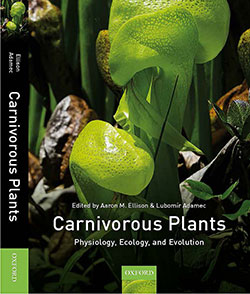
Oxford University Press is now publishing the fourth: Carnivorous Plants: Physiology, Ecology, and Evolution, edited by Aaron Ellison (Harvard Forest) and Lubomír Adamec (Institute of Botany of the Academy of Sciences of the Czech Republic). With contributions from Ellison, Adamec, and more than 50 other researchers from around the world, this new volume is a state-of-the-art synthesis of the genomics, biochemistry, physiology, ecology, evolution, and conservation biology of the more than 800 species of carnivorous plants.

Boston Globe Features Hemlock Hospice Art Installation

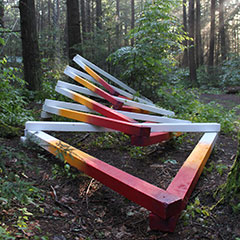
Harvard Forest and its Hemlock Hospice Art Installation was recently highlighted in the Boston Globe. The exhibit’s elegy to the hemlock is described by Renée Loth in this excerpt: 

Part sculpture, part pedagogy, part citizen science, the project speaks largely in artistic metaphor. But the popular Black Gum trail really is off-limits to the public, because its towering eastern hemlock trees have been infected by the invasive woolly adelgid . These tiny beetles suck all the nutrients out of the hemlock’s needles and leave ghost trees, bare and vulnerable to toppling over in the wind. Another stop along the hospice trail offers visitors a row of brightly decorated hard hats.”

2018 Undergraduate Summer Research Program

Applications are now open for the 2018 Harvard Forest Summer Research Program, an opportunity for college and university students across the U.S. to participate in 11 weeks (May 21-August 3, 2018) of paid, independent research with mentors from Harvard and other leading institutions.

2018 research projects cover many academic disciplines, including ecology, biogeochemistry, computer science, conservation, history, and engineering.
Research topics include the dynamics of forest ecosystems; the shifting impacts of invasive species in agricultural systems; data provenance; conservation initiatives; and science-art communication.

Depending on the project, students will conduct field and labwork in old-growth forests, historical archives, biogeochemistry labs; in data-rich computer environments; on research towers; and at the Harvard Farm.

Participants are housed on-site and, in addition to their research, attend career panels, evening workshops and seminars, and field trips. At the conclusion of the summer, they present their research at a final symposium.Undergraduate students from all majors are encouraged to apply (deadline: February 2, 2018).

New Insights on Forests in a Changing Climate

How will climate change affect New England forests over the next century? According to a series of new studies from HF Senior Ecologist Jonathan Thompson‘s lab, the answer is a mixed bag. In some respects, climate will exert an even greater impact than we thought: longer growing seasons will mean more tree growth and carbon storage. In other ways, climate impacts are likely to take a backseat to other factors, like the forests’ continued recovery from colonial-era deforestation.

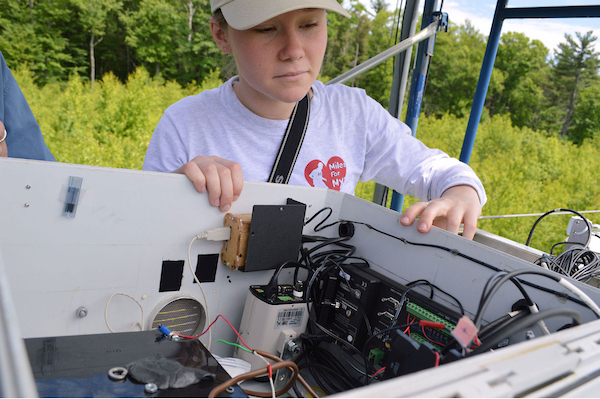
The three new papers employ a robust new landscape simulation model developed by Thompson’s team with support from the National Science Foundation’s Long-Term Ecological Research Program. The models were validated with decades of data from atmospheric towers and study plots at Harvard Forest and other sites around New England. 

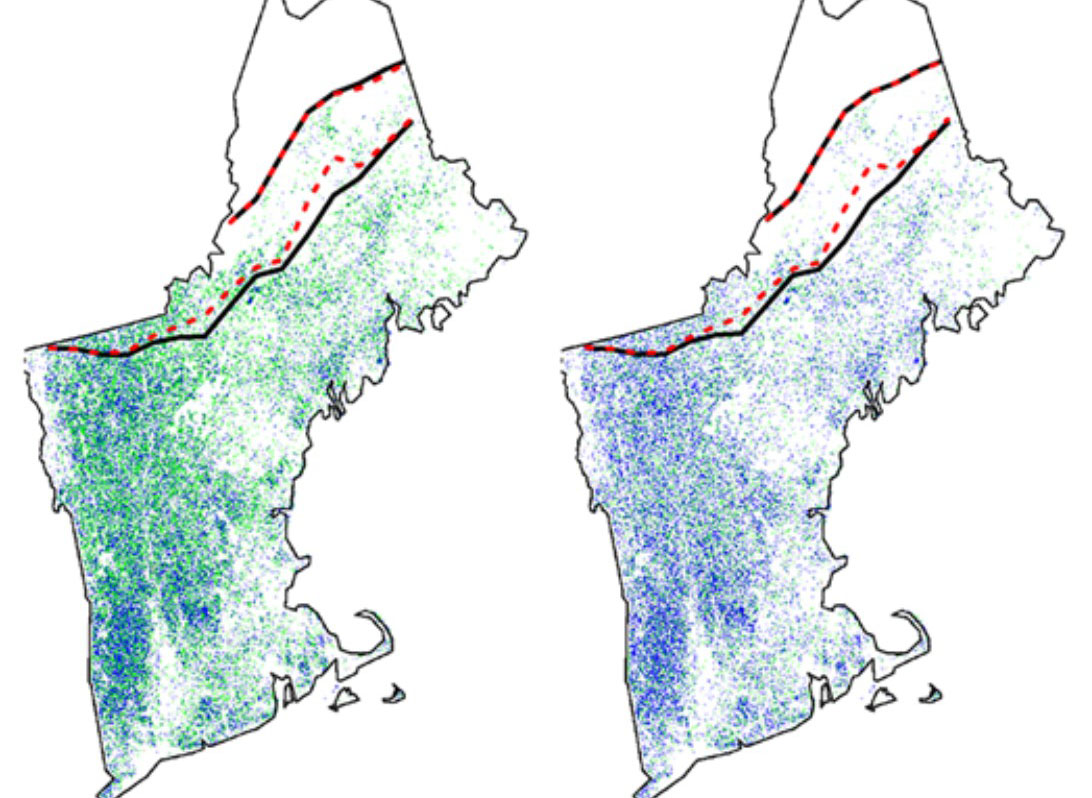
The first study, by Yu Liang, Thompson, and others in Global Change Biology, modeled how trees’ home ranges may shift in the future, with climate change as a constant, but not sole, factor. The team modeled additional real-world forest dynamics like interspecies competition, dispersal of new seedlings, and a range of tree-removing disturbances, like timber harvest. The study confirms that tree species turnover is an inherently slow process – one that cannot be dictated solely by temperature. So, while tree species’ preferred climates are moving rapidly northward, the physical migration of trees remains comparatively slow. The factors paving the way for range shifts for species at the leading (northward) edge of the region – basswood, birch, cherry, oak, and pitch pine – are likely to be the species’ photosynthetic capacity and their ability to compete for light. Ability to disperse seeds was an added predictive factor for trees at the trailing (southward) edge of New England – spruce, poplar, fir, ash. The study underscores the importance of understanding how interspecific competition and disturbance – and not solely climate – affect trees’ ability to shift north.

A paper in the Journal of Geophysical Research: Biogeosciences, by Matthew Duveneck and Thompson, modeled the next 90 years of tree growth in New England, taking into account the seasonal dynamics of climate change. Despite warmer summers slowing tree growth in July and August, longer springs and autumns will result in an overall rise in annual growth and carbon storage, helping to counter future climate change.

A third paper, in Landscape Ecology, modeled the next 100 years of forest species composition and growth dynamics, with and without climate change scenarios as added factors. Every scenario of climate change led to increases in biomass (tree growth), especially in the younger, more disturbed forests in the eastern part of New England. Even with climate as a factor, the continued recovery from colonial-era deforestation remained the dominant driver of species change and growth dynamics, implying that New England’s forests have a lot more growing left to do. 

Future work by Thompson’s team will build off of these findings as part of the larger New England Landscape Futures Project and the S3 RCN, also funded by the National Science Foundation. A forthcoming suite of studies will overlay these climate scenarios with alternative land-use change scenarios to create a fuller picture of the interplay between human decision-making and the natural environment over time. 

Conservation Leader to Offer Public Seminar

On November 14 at 6:30 p.m. in the Fisher Museum, national conservation leader Rand Wentworth will offer a free public seminar on best practices for leadership in the complex process of conserving land. The event is open to the public, and especially geared towards community leaders, landowners, conservationists, and students.

Wentworth is the Louis Bacon Senior Fellow in Environmental Leadership at Harvard University. From 2002 to 2016, he served as President of the Land Trust Alliance, a national conservation organization that serves as the leader for 1,100 land trusts. With Wentworth at the helm, the Alliance built its accreditation program, the Terrafirma legal defense insurance, and bi-partisan support in Congress to expand funding and tax incentives for conservation. Under his leadership, land trusts doubled the annual pace of conservation in America.

“Today, the most effective leaders are geniuses at building relationships, teams, and coalitions,” says Wentworth. “They gain power by giving it away.” In this event, Wentworth will draw on the latest research from the Harvard Kennedy School and the Harvard Business School, and discuss the leadership practices that get proven results.

Wentworth is a graduate of Yale University and holds an MBA in finance from Cornell University. Before joining the Land Trust Alliance, he served as vice president and founding director of the Atlanta office of the Trust for Public Land, where he tripled the size of the national park honoring Martin Luther King, Jr. and completed a $143 million capital campaign to protect 70 miles along the Chattahoochee River, the primary drinking water supply for the City of Atlanta.

Wentworth’s seminar is co-sponsored by the Harvard Kennedy School’s Center for Public Leadership. The event is a part of the Wildlands and Woodlands initiative of the Harvard Forest, which recently released a new report calling for the protection of 70% of New England in forests and 7% of the landscape in farmland by 2060, reports on recent trends in land-use change and conservation funding, and makes recommendations for slowing and shifting development in a way that maintains the connection between communities and the land that sustains them.

(Photo by David Foster)

Study: Warmer Forest Soils Release More Carbon, Accelerating Future Warming

A new study in the journal Science reports on 26 years of data from the world’s longest-running forest soil warming experiment, based at the Harvard Forest since 1991. It suggests that in a warming world, a self-reinforcing and perhaps uncontrollable carbon feedback will occur between forest soils and the climate system, adding to the build-up of atmospheric carbon dioxide caused by burning fossil fuels, and ultimately accelerating global warming. 

Each year, fossil fuel burning releases about 10 billion metric tons of carbon into the atmosphere. Helping to offset this are the astonishing 3,500 billion metric tons of carbon stored in the world’s soils. “If a significant amount of that soil carbon is added to the atmosphere,” says Jerry Melillo, lead author of the study, “due to microbial activity in warmer soils, that will accelerate the global warming process. And once this self-reinforcing feedback begins, there is no easy way to turn it off.”

The study points to the importance of long-term research, which at Harvard Forest is funded by the National Science Foundation’s Long-Term Ecological Research Program. In the 26 years that the study has been running, the soil microbial community has fundamentally shifted several times in response to experimental soil warming, resulting in major fluxes in carbon release from soils.

Collaborators in this study include Serita Frey, Stuart Grandy, and Mel Knorr from the University of New Hampshire; Kristen DeAngelis and Grace Pold of the University of Massachusetts-Amherst; Will Werner and Michael Bernard of the Marine Biological Laboratory; and Frank Bowles of Research Designs in Lyme, NH.

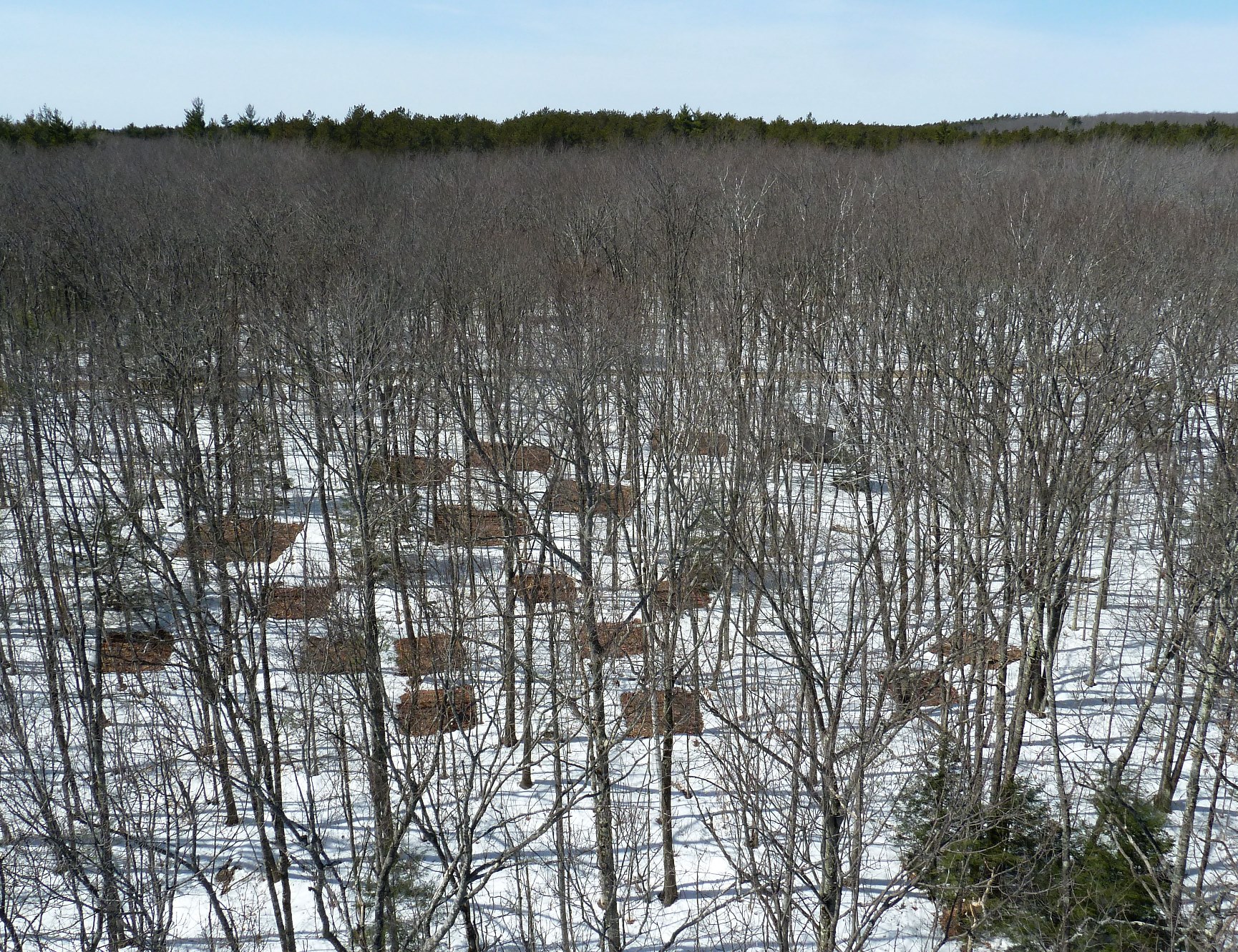
(Photo of the Harvard Forest soil warming plots by Audrey Barker Plotkin)

Pits and Mounds: Diminished Elements in a Second-Growth Landscape

Pits and mounds might be considered the charismatic microtopography of the forest. These features, vividly nicknamed ‘pillows and cradles,’ are formed by the uprooting of trees. In most forests, these features contribute important habitat diversity while varying soil processes. A new study in the journal Forest Ecology & Management, led by HF senior scientist Audrey Barker Plotkin shows how pits and mounds differ in stature and function in old-growth versus second-growth forest.

The history of forest clearance for agriculture and repeated logging of the rest of New England forest erased many pits and mounds from the landscape. The smaller size of trees in second-growth forest now limits the stature of new pits and mounds.

The new study pulls together a summer research project by former HF student Bennet Leon, the doctoral thesis of Peter Schoonmaker, and Barker Plotkin and David Foster‘s long-term work to compare pit and mound structure and function at the HF hurricane pulldown experiment (second-growth forest) and at the Harvard Pisgah tract, an old-growth forest forest that was blown down by a hurricane in 1938.

A rare set of repeated measurements of 100 individual pit-mound structures in the pulldown documented the pace and pattern of mound and pit erosion over 25 years. Although 40% of mounds in the pulldown were 1-3 m tall immediately after the simulated hurricane, after 25 years maximum mound height was 0.9 m. In contrast, some mounds at Pisgah remained >2 m tall 50 years after the 1938 hurricane.

And although sun-loving tree saplings – such as birches – were disproportionately found on mounds in both forests, mounds may be a more important habitat feature in old-growth forests because niches for early successional species are few in these old forests but common in second-growth forests.

The authors note that foresters and landowners interested in restoring old-growth characteristics can protect and enhance pit-mound features, and cultivate large-diameter trees that will eventually create the large, long-lasting pit-mounds of the future.

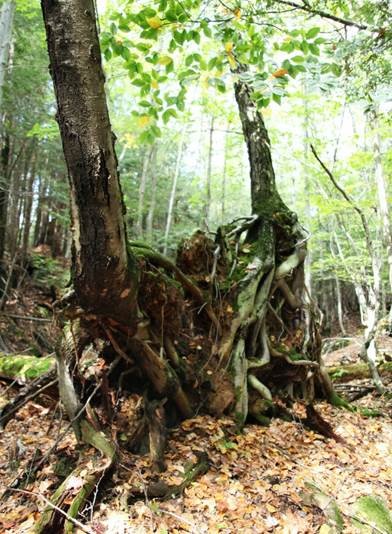
(Photo of birches growing on a windthrown root mound, by David Foster)

New Report: Forests, Funding, and Conservation in Decline across New England

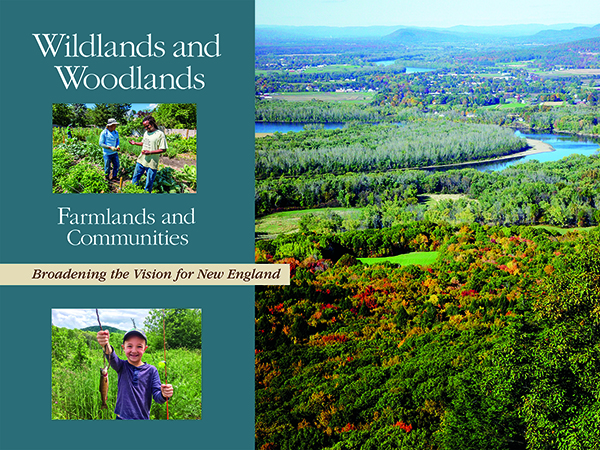
The Harvard Forest, Highstead, and authors from around New England have released a new report called “Wildlands and Woodlands, Farmlands and Communities,” which broadens a 2010 Harvard Forest vision for conservation to permanently protect forests and farmlands as natural infrastructure that sustains both people and nature in the region. 

The report was released to the public on Sept. 19 at a major event at the Harvard Center for Government and International Studies, co-sponsored by the Kennedy School Center for Public Leadership. Speakers included HF Director and report lead author David Foster; Rand Wentworth, Louis Bacon Senior Fellow in Environmental Leadership at the Harvard Kennedy School and President Emeritus of the Land Trust Alliance; Jane Difley, President of the Society for the Protection of New Hampshire Forests; Jocelyn Forbush, Chief of Operations and Programs for The Trustees of Reservations; and Matt Polstein, Founder of the New England Outdoor Center; with a keynote by Terry Tempest Williams, acclaimed author and writer-in-residence at the Harvard Divinity School.

The report highlights recent trends in land-cover change and conservation funding, connects New England’s forests and farms to climate resilience and economic sustainability, and recognizes the region’s diverse conservation needs across cities, suburbs, and rural areas.

The report – led by HF Director David Foster; HF Director of Science and Policy Integration Kathy Fallon Lambert; and HF Senior Ecologist Jonathan Thompson; along with many additional HF scientists – notes that New England is losing an average of 24,000 acres of forest to development each year. Land-use change, says the report, is likely to exert even greater pressure on New England forest ecosystems than climate change over the next half-century. The report also highlights trends in public funding for conservation, which has dropped 50% from its peak in 2008, to a figure slightly below 2004 levels. The pace of regional land conservation also slowed substantially during that timeframe, from an average of 333,000 acres per year in the early 2000s to about 50,000 acres per year since 2010, even though landowners’ interest in conserving their land remains high.

Despite these trends, the report shows that the original Wildlands and Woodlands vision is still achievable. It calls for tripling the current pace of conservation, reversing public funding trends, and putting more land to work for sustainable forestry and farming.

The report ends with hopeful signs such as a history of long-standing public support for land protection, a growing network of community-based regional conservation partnerships (including networks convened by or including the Harvard Forest – such as Academics for Land Protection in New England), and recommendations for preserving the distinct flavor of conservation in New England that explicitly recognizes the value of private landowner decision-making, working lands, and innovative policy and finance.

The science background for the report is based substantially on studies from the Harvard Forest Long-Term Ecological Research, Research Experience for Undergraduates (REU), and Research Coordination Network programs, funded by the National Science Foundation.

The report will be released to the public in an invitation-only, New England-wide event co-sponsored by the Harvard Kennedy School’s Center for Public Leadership.

Linking Science & Art: Hemlock Hospice

On Saturday October 7th, from 12 noon until 4 pm, the Harvard Forest will host an opening reception for the Hemlock Hospice art installation on the Prospect Hill Tract and feature prints, drawings and sculptures in science-communication in the Fisher Museum. This exhibition is the work of interdisciplinary artist and designer David Buckley Borden’s year-long collaboration with scientists and students as a Harvard Forest Bullard Fellow. The event is free and open to the public.

A self-guided tour of the Hemlock Hospice field installation will be available through November 2018. Copies are available in the Fisher Museum and can also be downloaded and printed.

How Do We Measure Carbon?

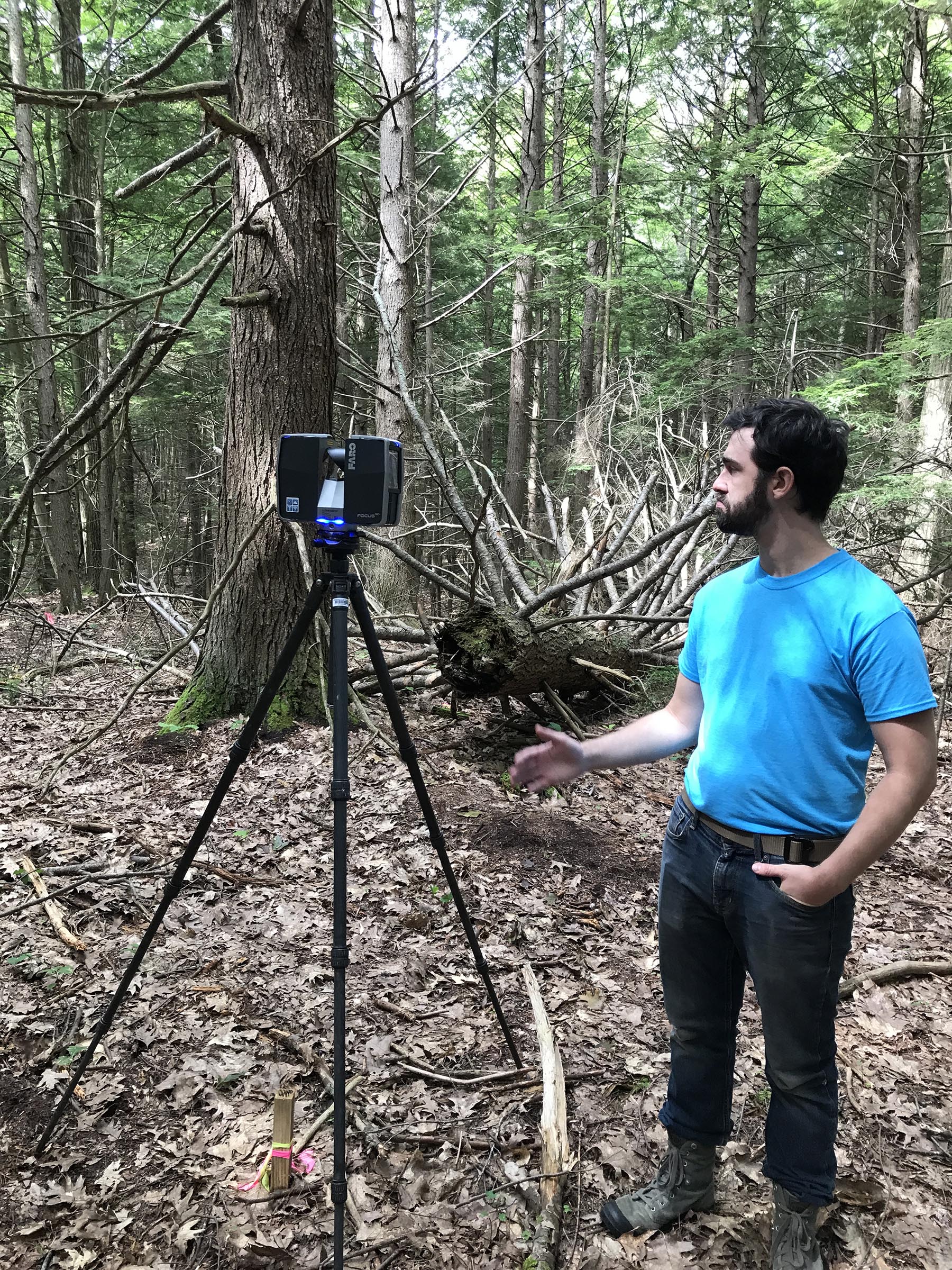
We know that forests store carbon, but how do we measure the carbon stored in trees without cutting them down? An international group of LiDaR (Light Detection and Ranging) scanning experts and forest scientists gathered at the Harvard Forest this August to compare scanning and destructive sampling methods to calculate tree volume, mass, and carbon. 

Most researchers use equations that estimate mass (and carbon) based on simple, nondestructive measurements of diameter and species. Improving these equations, and exploring new methods of estimating mass from detailed LiDaR techniques is important to estimate forest carbon more accurately and efficiently.

The LiDaR activity was coordinated by Alan Strahler of Boston University, with funding from an NSF Research Coordination Network grant, and involved scientists from Massachusetts, Maine, Michigan, Virginia, Australia, Canada, and the United Kingdom. A large forest plot was scanned with various lidar instruments that can reconstruct the volume of complex objects including trees. Then the Harvard Forest Woods Crew felled 20 trees in the plot that were dissected into stem, branch, bark, and leaf components to provide direct measurements of tree mass. Three additional trees were scanned and then deconstructed and measured, branch-by-branch, from the top down using the Forest’s canopy lift.

Improving Approaches for Scientists and Stakeholders to Co-design Environmental Scenarios

Planning for the future involves overcoming uncertainty to anticipate the unknown. An increasingly popular approach for developing future plans while managing uncertainty is scenario development, whereby several consistent and coherent storylines are developed to reflect different hypotheses about how the future might unfold. In a new paper published online in the journal Ecology and Society by Marissa McBride of Harvard Forest and Imperial College London, in collaboration with Harvard Forest scientists Kathy Fallon Lambert and Jonathan Thompson, the team offers a tested approach for increasing the effectiveness of scenario development for environmental decision-making by facilitating the active contributions of stakeholders and scientists in the scenario design process.

Using the Harvard Forest-based New England Landscape Futures project as a case study, the authors explored how to balance the needs of stakeholders and scientists during the process of developing future scenarios. They found that by focusing on three priorities: maximizing stakeholder involvement in the scenario development process, efficient use of stakeholder time, and research needs, they were able to develop a robust protocol for engaging stakeholders in the full scenario development process via an intensive, structured, one-day workshop. The resulting narrative scenarios and quantitative inputs that are the outcomes of the intensive workshops are able to parameterize land-use simulations, which can in turn inform environmental decision-making. The authors tested their approach in six state-specific workshops and successfully elicited divergent scenarios that stakeholders perceived as being plausible and relevant. The authors provide additional details about how to manage expectations, balance stakeholder needs and research needs, and how to overcome challenges inherent in the scenario development process. They conclude that engaging stakeholders in the design process can improve the effectiveness of the ecological scenario development process.

Science Policy Exchange Launches New Website

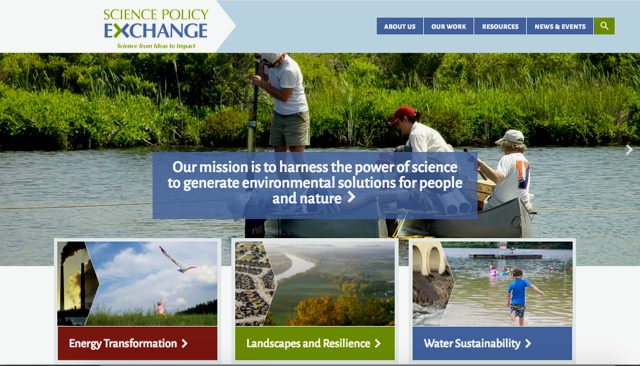
The Science Policy Exchange has launched a new website, science-policy-exchange.org, to communicate our mission, feature our three initiatives, and share our resources, including publications, reports, policy briefs, videos, infographics, media coverage, and public comments on policies that effect our atmosphere, land, and water.

Harvard Forest is a founding partner of the Science Policy Exchange, a collaborative of six world-class research institutions and four Long Term Ecological Research (LTER) sites all dedicated to increasing the influence of science on environmental policy, conservation, and natural resource management

See how we here at Harvard Forest are improving the connections between science and society, and advancing science-based environmental solutions as a partner in the Science Policy Exchange by visiting the new website science-policy-exchange.org. You can also follow the Science Policy Exchange on twitter @scixpolicy.

To learn more about the Science Policy Exchange or share your ideas for future activities, contact Science Policy Exchange Director Kathy Fallon Lambert at klambert01@fas.harvard.edu.