Harvard Forest Biennial Report Released

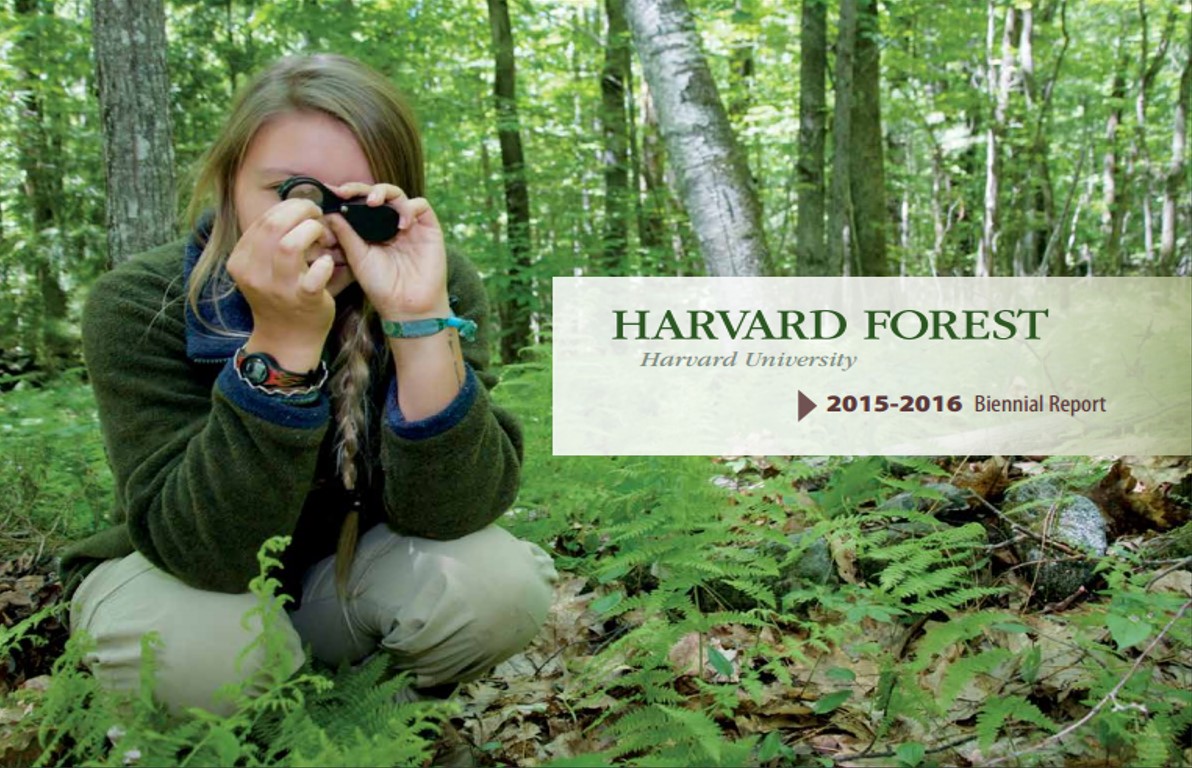
A new report highlighting the last 2 years of research and education at the Harvard Forest, plus a timeline of the Forest’s Long-Term Ecological Research program, is now available online and in hard copy by request.

Topics include the new Harvard Farm, research out of the new Tree Ring Laboratory, an update on hemlock woolly adelgid research, progress toward mapping scenarios of landscape change, and the Witness Tree book project.

Interactive Map Highlights History and Ecology of Martha's Vineyard

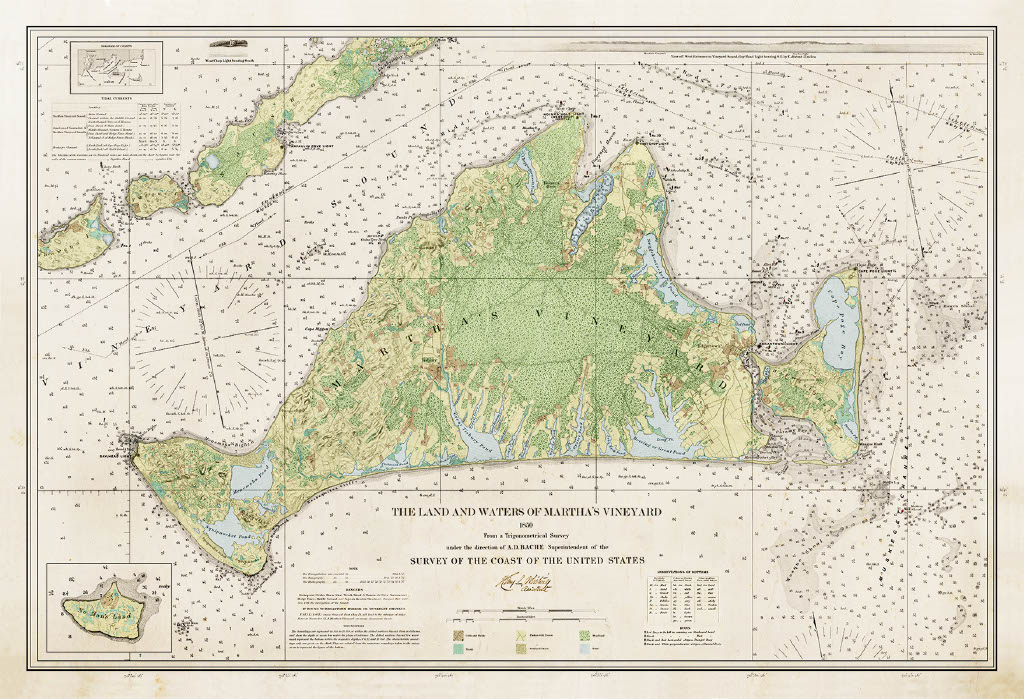
New, deeply researched maps of Martha’s Vineyard encourage exploration of the Island by first invoking the Island’s past–how people, nature, and farm animals shaped it centuries ago.

The maps are a precursor to the forthcoming book, A Meeting of Land and Sea: Nature and the Future of Martha’s Vineyard, written by Harvard Forest Director David Foster following 20 years of research on the Island. The book, written for a broad audience and bedecked with rich photos, illustrations, and maps, will be published in January 2017 by Yale University Press.

An interactive map viewer, created by Harvard Forest GIS Research Assistant Brian Hall, allows online viewers to toggle between the modern day landscape and 19th-century farms, woodlots, orchards, bogs, and rails at the Island’s agricultural peak. . An exquisitely detailed 19th-century survey chart by Henry Laurens Whiting forms the historical framework for the interactive map. Whiting’s map, newly updated by a Harvard Forest design team (Foster with Jenny Hobson), is now also available in printed form, with proceeds to benefit the development of a modern flora for Martha’s Vineyard and research in plant conservation and forest ecology at Polly Hill Arboretum.

Foster presented the map and its history to a packed crowd in West Tisbury on July 7. 

Summer Research in Students' Own Words

Students in the Harvard Forest Summer Research Program are blogging about their 11-week internships studying soils, sap flow, species models, forest landowner decision-making, even environmental art.

From May to early August, students collect and analyze data for their independent projects with the guidance of a research mentor, often working in a small team of students on a complex, multi-faceted research question. Workshops and seminars throughout the summer improve students’ skills in statistical analysis and science communication, and introduce them to researchers and graduate students throughout the spectrum of environmental fields.

The program, now in its 26th year, attracts students from around the U.S. and is supported by a variety of funding sources, including the National Science Foundation, the Long-Term Ecological Research Program, Harvard University’s Faculty of Arts & Sciences, and Mount Holyoke College’s Miller Worley Center for the Environment. This year’s cohort of 23 students was drawn from 18 colleges and universities.

Students will present their final research results in a symposium in the Fisher Museum on August 4.

2016-2017 Bullard Fellows Announced

We are pleased to announce the Harvard Forest Charles Bullard Fellows for 2016-2017. The mission of the Charles Bullard Fellowship Program is to support advanced research and study by individuals who show promise of making an important contribution–either as scholars or administrators–to forestry and forest-related subjects, from biology to earth sciences, economics, politics, administration, law, and the arts and humanities. 

FELLOW INSTITUTION RESEARCH AREA
David Basler University of Basel (Switzerland) Plant-climate interactions, with a focus on tree phenology
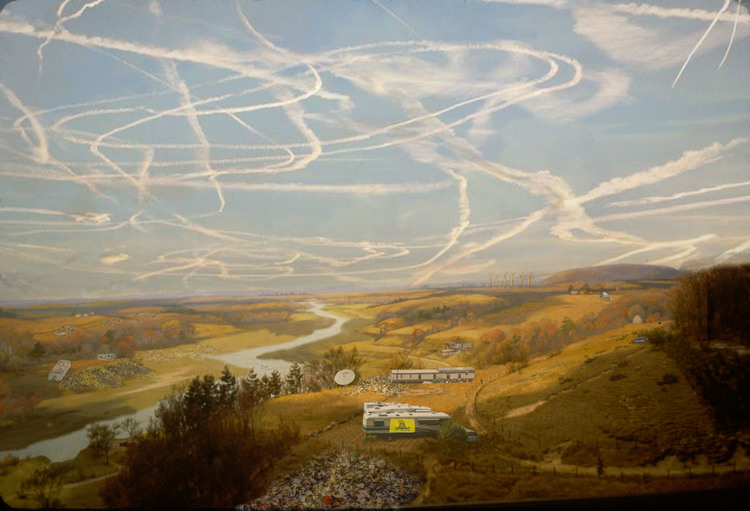
David Buckley Borden Arts-based science communication, landscape scenario visualization, interpretive trail design
Walter Carson University of Pittsburgh Ecology of disturbance and salvage logging in temperate forests
Lucy Hutyra Boston University Biogeochemistry in forest systems and urban areas
Brenden McNeil West Virginia University Canopy architectural properties of tree species
Klaus Puettmann Oregon State University Silvicultural approaches to increase the adaptive capacity of forest ecosystems
Michael Reed Tufts University Extintion risk of birds in human-dominated landscapes

Browse highlights of recent Bullard Fellows:

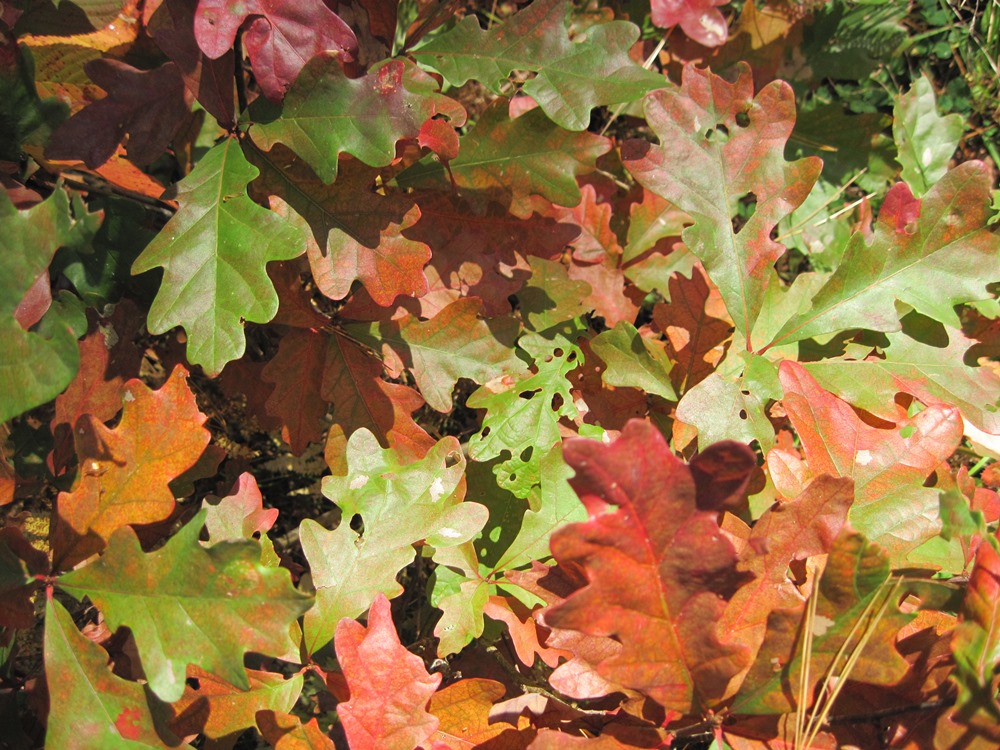
(Image by David Buckley Borden)

New Study: NE Canadian Forests a Refuge as Warming Creeps North

A new study co-authored by HF Senior Ecologist Neil Pederson forecasts potential winners and losers in the changing climate of the northern boreal forest. The study of more than 26,000 trees in the Canadian province of Quebec covered an area the size of Spain.

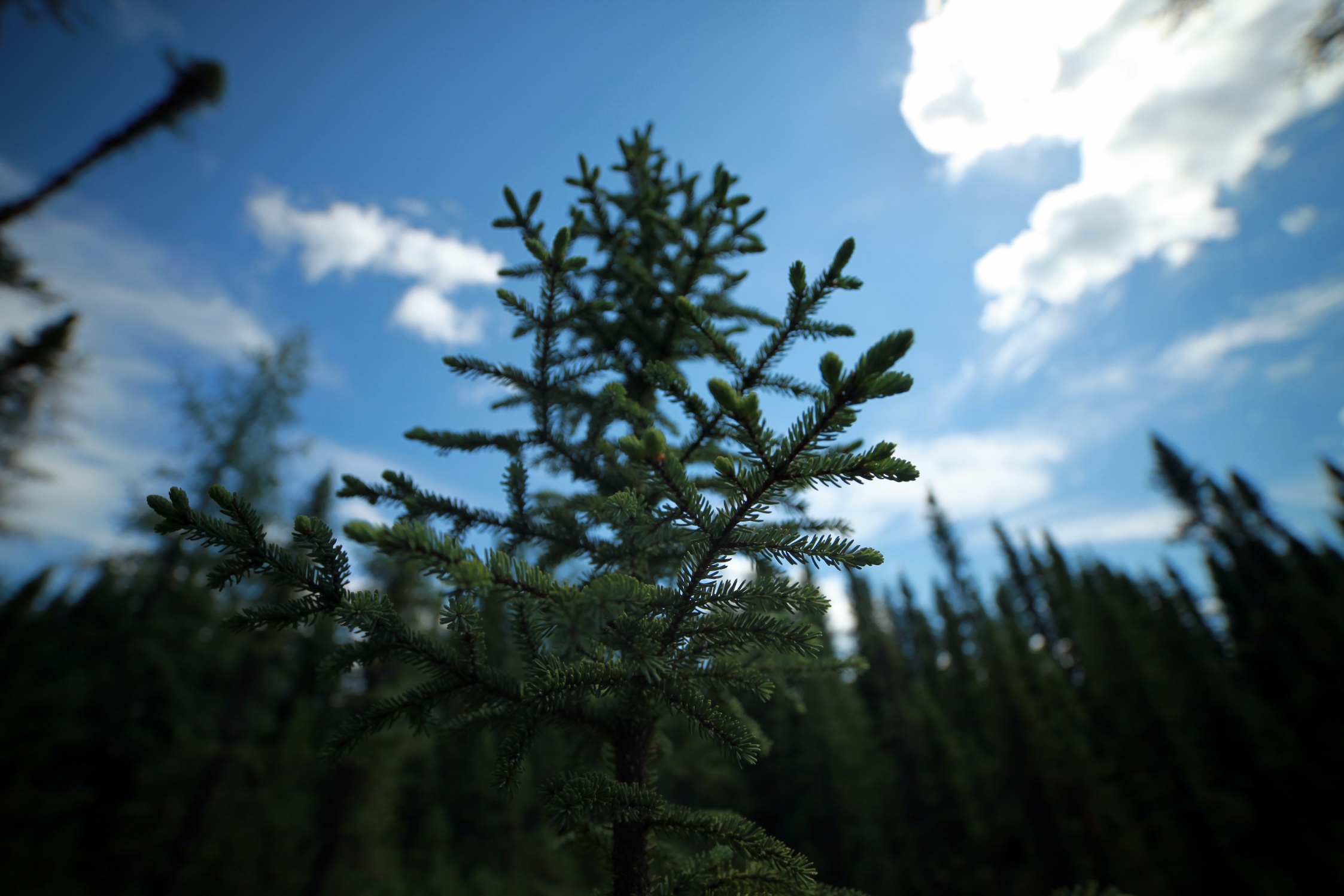
According to the study, published today in the journal Science, boreal forests in far-northern latitudes may one day act as a climate refuge for black spruce, the foundational tree for the northwoods ecosystem – a major source of the world’s paper; home to caribou, snowshoe hare, lynx, and sable; and nesting site for dozens of migratory bird species.

“During this century, the northwoods will experience some of the Earth’s largest increases in temperature,” says Loïc D’Orangeville, postdoctoral researcher at Université du Québec à Montréal and Indiana University, who led the collaboration of scientists from six institutions (including Harvard Forest) in the U.S. and Canada. “It’s possible that only a relatively small part of North America’s boreal forest will have enough water to compensate for the increased demand.”

Northern boreal forests are a crucial part of the global climate puzzle, comprising nearly 30 percent of the Earth’s forested area and storing at least 20 percent of its carbon. The study’s tree ring analysis revealed these forests’ sensitivity to changes in temperature and precipitation.

North of a certain latitude (broadly 49 degrees North), the study showed, warming melts snow earlier and lengthens the growing season: good news for tree growth. As climate warms through 2070, more than two-thirds of the forested territory just above the 49thparallel should still be showing a positive response.

South of the 49th parallel, however, warming and the lengthened growing season are more likely to cause drought stress that could overwhelm black spruce. The researchers say this may explain increased tree mortality already being observed in the region.

“This part of the forest could adapt to climate change in our lifetime, if future warming stays below the temperature threshold,” says Neil Pederson, co-author of the study and a senior ecologist at Harvard Forest. “But the future cannot be perfectly predicted.” And, he cautions, unpredictable factors, such as the recent mega-fires in boreal regions of western Canada and Alaska, could disrupt this dynamic.

(Photo of a black spruce by Loïc D’Orangeville.) 

New Study: Carbon Standards to Bring Annual Health Benefits to Most U.S. Counties

Most US regions would gain economic benefits if power plants followed carbon standards with moderately stringent emissions targets and a high level of compliance flexibility, according to a new study co-authored by Kathy Fallon Lambert, Director of the Science Policy Exchange and the Harvard Forest Science & Policy Integration Project.

The new paper, “An Analysis of Costs and Health Co-benefits for a U.S. Power Plant Carbon Standard,” was published today in the open access journal PLOS ONE. The lead author is Dr. Jonathan Buonocore from Harvard T.H. Chan School of Public Health, with additional co-authors from Syracuse University and Resources for the Future.

The new study is the first to break down the costs and monetary value of health co-benefits of a power plant carbon standard by sub regions for the entire U.S.

The researchers estimated the economic value of the health co-benefits associated with improved air quality from reduced emissions of sulfur dioxide, nitrogen oxides, and particulate matter from the power sector that would accompany power plant carbon standards. The carbon standards in the study were similar to, but not the same as, the Clean Power Plan finalized by the U.S. Environmental Protection Agency on August 3, 2015.

The researchers found that the health co-benefits of the carbon standards are widespread with most counties receiving more than $1 million in health co-benefits annually from the carbon standards in the study. Counties in the Northeast and Southwest U.S. tended to receive the highest total value in health co-benefits. The regions with the greatest health co-benefits per person are the Mid-Atlantic, Ohio River Valley, and South-Central regions of the U.S. Nearly every individual in these regions gain at least $100 in health co-benefits yearly due to improved air quality. Individuals living in highly populated areas downwind from coal-fired power plants that shift to cleaner energy sources stand to benefit most.

The authors frame their results as a conservative estimate because they only looked at a subset of benefits. With the full range of climate, health, and ecosystem benefits factored in, they expect that net benefits would be even larger and would accrue to all regions even more quickly following implementation.

Study: U.S. Must Step Up Forest Pest Prevention

Imported forest pests cause more than $2 billion in damage each year and can be found in all 50 U.S. states. Efforts to prevent new pests must be strengthened if we are to slow the loss of our nation’s trees, says a new study co-authored by Harvard Forest scientists David Orwig and David Foster. The study was led by the Cary Institute of Ecosystem Studies and coordinated by the Science Policy Exchange, a research consortium based at the Harvard Forest and led by Kathy Fallon Lambert and Marissa Weiss.

The study, published today in Ecological Applications, was conducted by a team of 16 scientists – from Harvard Forest, the USDA Forest Service, The Nature Conservancy, Dartmouth College, McGill University, and Michigan State University. It is the most comprehensive synthesis to date on forest pests. It covers both ecological and economic impacts and evaluates a range of policy solutions.

According to the study, 57 imported forest pests live in Massachusetts today. Our region is particularly susceptible to new pests because our forests contain many trees that are closely related to trees in Europe and Asia.

Today, sixty-three percent of U.S. forestland, or 825 million acres, are at risk of increased damage from pests that have already established here. 70% of those forest pests arrived on imported plants. An average of 2 to 3 new pests arrive each year.

Current efforts to prevent new pests are not keeping pace with escalating trade. However, the study reports that current trade policies are projected to return $11 billion in net benefits by 2050. The authors project larger benefits with stronger pest prevention efforts.

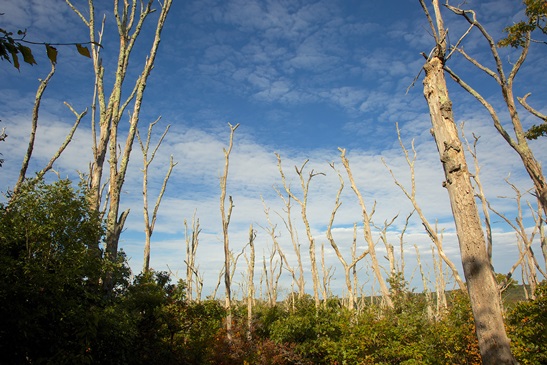
(Photo of dead oaks on Martha’s Vineyard, due to invasive winter moth caterpillars, by David Foster.)

Bullard Spotlight: Rose-Marie Muzika and the Ghosts of Pests Past

Bullard Fellow Rose-Marie Muzika, a forestry professor from the University of Missouri, has long been interested in forest change over time.

During her fellowship at Harvard Forest, she is studying the impact of insects and diseases on today’s forests, as well as their legacy on forests of the past.

Her work is focused specifically on the consequences of two non-native organisms: gypsy moth and chestnut blight.

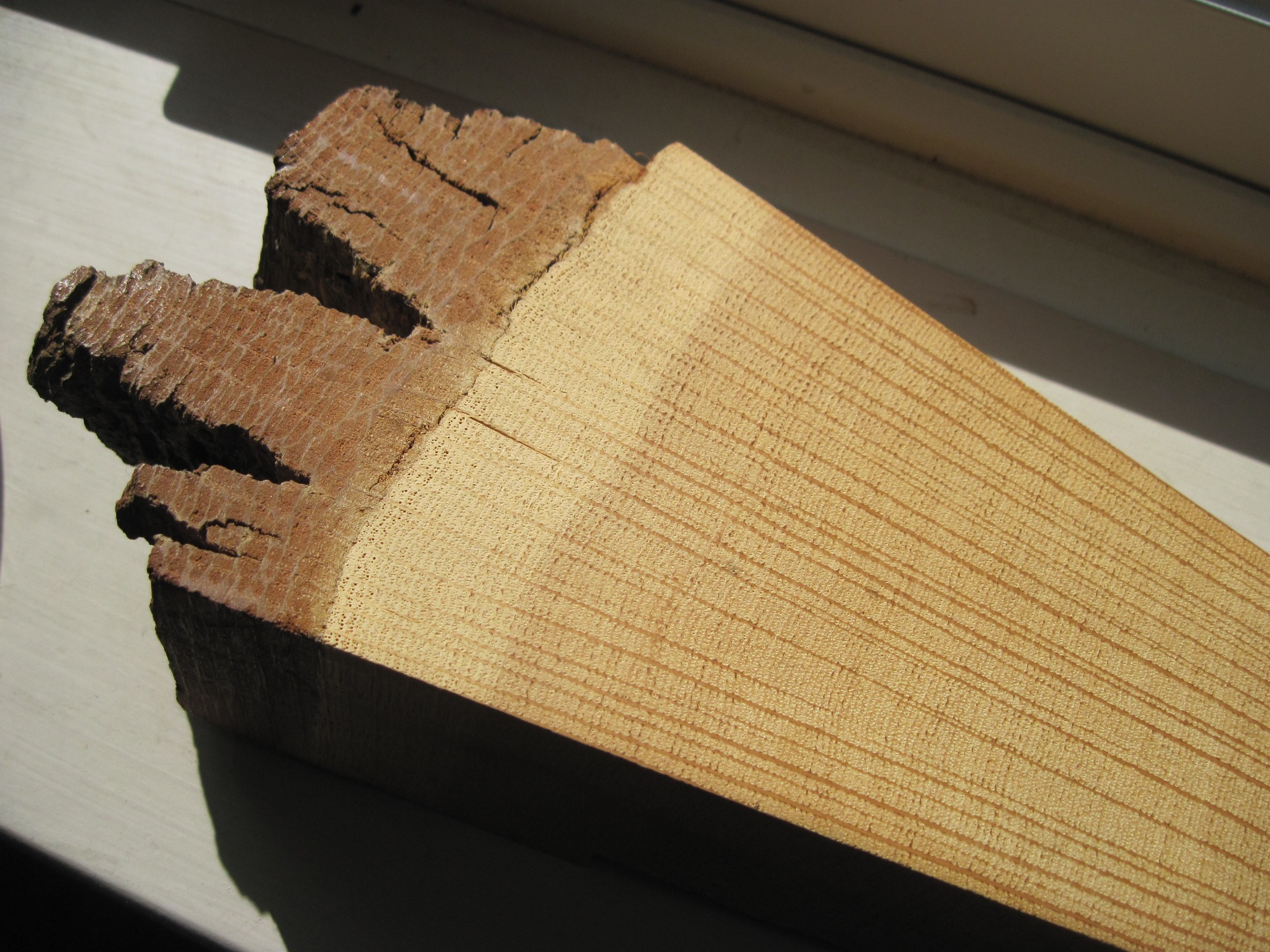
A sprouting American chestnut stump is evidence of the chestnut blight’s arrival in 1920. Long-term study plots at the Forest have allowed Muzika to examine nearly a century of chestnut sprout dynamics.

Evidence of past gypsy moth outbreaks are more subtle, and include slower growth rates in trees defoliated by the gypsy moth caterpillar. Muzika uses dendrochronology (tree ring records) to determine the influence of gypsy moth defoliation ln the long-term growth of northern red oak. 

The Harvard Forest Archives are a key ingredient to Muzika’s investigation. In the Archives, she explores past research records and documents that detail gypsy moth outbreaks and chestnut blight at the Harvard Forest and in surrounding forests.

She is also revisiting the physical plot locations from studies that were established by Harvard Forest scientists in the 1930s and 1940s, to identify surviving trees and track how they have they have grown over time. 

Muzika says it’s the history of Harvard Forest that attracted her to the Bullard Fellowship, noting, “The careful documentation of studies conducted here provide a unique opportunity to delve into the past to provide insight to the present and the future.”

New Harvard Conservation Award to Inspire Future Action

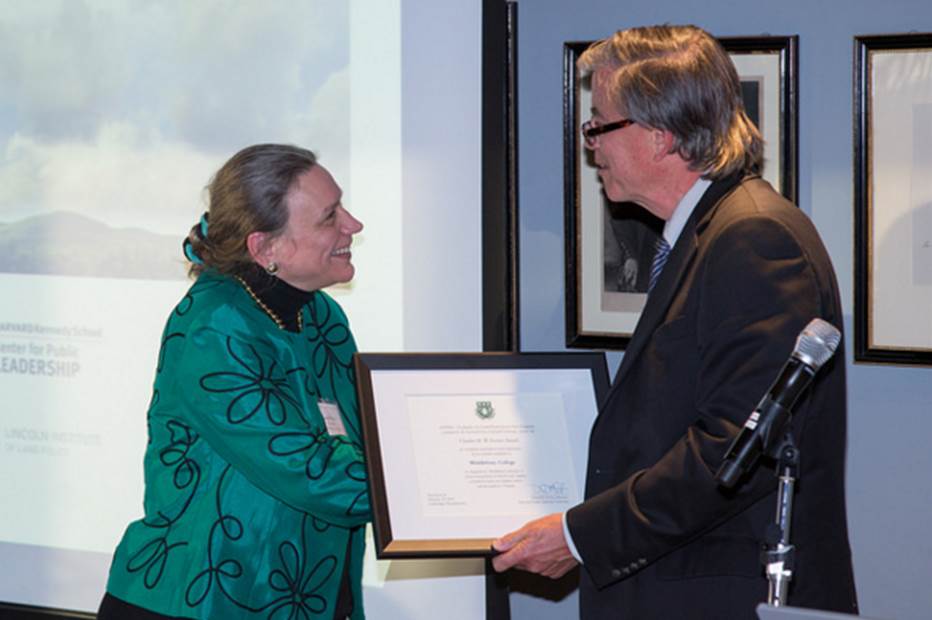
The Harvard Forest recently joined Harvard Kennedy School’s Environmental and Natural Resources Program and Center for Public Leadership, along with the Lincoln Institute of Land Policy, to present the inaugural Charles H.W. Foster Award for Exemplary Academic Leadership in Land Conservation to Middlebury College. The President of Middlebury College, Laurie Patton (Harvard College ’83), was present to accept the award.

“New England is a place where conservation precedents are set which impact the rest of the world,” said Jim Levitt, Director of the Harvard Forest Program on Conservation Innovation, who convened the ceremony on behalf of ALPINE (Academics for Land Protection in New England) – a land conservation network based at the Harvard Forest. “It is a huge honor for us to be able to recognize the achievement of Middlebury College in showing the way for academic institutions to participate in the land conservation enterprise.”

The award, this year honoring Middlebury for its conservation of the 2,100-acre Bread Loaf campus in Vermont, was presented in honor of Charles H.W. Foster, the distinguished conservation leader and beloved lecturer at Harvard Kennedy School’s Environment and Natural Resources Program, who passed away in 2012. Dr. Foster was a key player in the establishment of both the Cape Cod National Seashore and the Silvio O. Conte National Wildlife Refuge, as well as a great many other local and regional initiatives.

At the award ceremony, Henry Lee, Director of the Belfer Center for Science & International Affairs at Harvard Kennedy School, said of Foster: “What we celebrate today is the legacy of a great mind, and the notion that the goals that he fought for will not be forgotten.”

David Foster, Director of the Harvard Forest, followed these remarks by noting the important role that academic institutions and their diverse constituencies – students, administrators, and alumni – can play in conservation and environmental stewardship.

In her remarks, Laurie Patton, President of Middlebury, described some of the reasons Middlebury chose to protect its 2,100-acre Bread Loaf campus: “We have preserved this land for education, for recreation, and for conservation. We love [Bread Loaf] because it embodies the heart and soul of learning in a setting that challenges us and inspires us.”

Patton accepted the award with gratitude for those who made it possible, including former Middlebury President Ron Liebowitz, also in attendance – and Louis Bacon, a Middlebury alumnus whose generous matching gift through his private foundation helped conserve the Bread Loaf campus. Bacon has also underwritten the Louis Bacon Environmental Fellows Program, launched fall 2015 and housed at Harvard Kennedy School’s Center for Public Leadership, where he is a member of the Center’s Leadership Council.

Middlebury has long been a leader in environmental education and bold sustainability action. They were the first in the U.S. to create an Environmental Studies major, and are now poised to become a carbon-neutral campus. Patton described the Bread Loaf project’s role in this legacy: “This Bread Loaf conservation project has allowed us to again contribute to the public and environmental good, and to advance our environmental ethos while also being fiscally responsible.” She noted that conservation often means protecting the healthy interaction between natural environments and the built environment.

Patton closed her remarks with a poem by Robert Frost, who was closely involved in Bread Loaf’s early years. The poem described trees in a landscape that grows “wiser and older” and “means to stay”. Patton concluded, “We are delighted to partner with Harvard and all the other institutions of higher education to make this ‘older and wiser’ conservation wisdom a reality.”

Nan Jenks-Jay, Middlebury’s Dean of Environmental Affairs, closed the ceremony by saying, “This is such a special moment, one that I imagine will be repeated many times over as other colleges and universities follow Middlebury’s lead.”

Senior Ecologist Chosen for Yale Fellowship

Harvard Forest Senior Ecologist Aaron Ellison is spending the spring semester as a Bass Distinguished Visiting Environmental Scholar at the Yale Institute for Biospheric Studies. He will be teaching an undergraduate course in Environmental Studies and conducting research on how portrayals and perceptions of landscapes influence conservation decision-making. He is also finishing two books, Stepping in the same river twice: replication in biological research (to be published by Yale University Press), and Big Data: design and analysis of large-scale, long-term studies in ecology and environmental science (to be published by Sinauer Associates).


2016 Harvard Forest Ecology Symposium

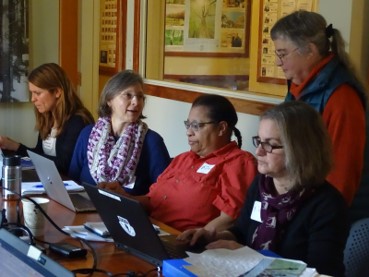
The 27th annual Harvard Forest Ecology Symposium will be held Tuesday, March 15th from 9:00 a.m. to 5:30 p.m. in the Harvard Forest Fisher Museum.

Registration is closed. Please contact Audrey Barker Plotkin (aabarker@fas.harvard.edu) with any questions.

We will also live-stream the talks at this address.

Talks this year will focus on future directions for the Harvard Forest Long-Term Ecological Research (LTER) program.

Please note that LTER graduate students and post-doctoral fellows attending the Symposium are invited to dinner following the event. Email hart3@fas.harvard.edu to RSVP.

  • Program
  • Explore abstracts (posted as they are submitted)
  • HF research collaborators: Submit a research or poster abstract

Bullard Spotlight: Joshua Rapp on Sugar Maples in a Changing Climate

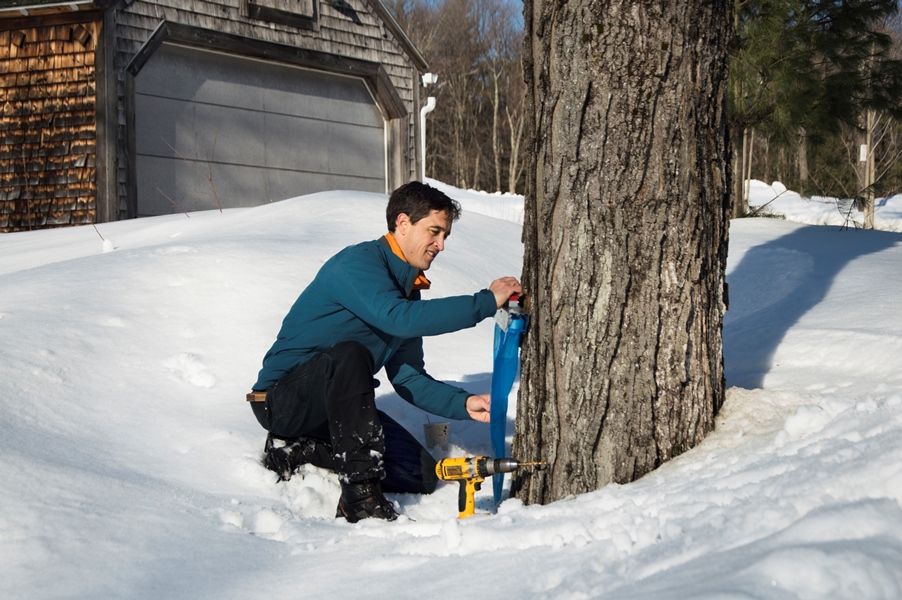
Our sugaring season began Feb. 1 this year, a full two weeks earlier than usual. Bullard Fellow Joshua Rapp taps Harvard Forest trees to inform several inter-related studies of sugar maple.

The first study, Rapp began in 2011, when he was a Harvard Forest postdoctoral fellow examining the relationship between sugar maples’ stored nonstructural carbohydrates (sugars and starches) and seed production.  His early results show that in mast years, when sugar maples produce an exceptionally high number of seeds, the amount of sugar in their sap drops the following spring.

Rapp’s second project expands upon his sap collecting and seeks to understand how maple syrup production may be affected by climate change. With colleagues from several other universities, he is studying how sap quality – its sugar content and secondary chemistry – is related to climate, across a latitudinal gradient that spans the sugar maple’s range from southern Virginia to Quebec. The project is funded by the Northeast Climate Science Center.

Rapp’s third project looks at another aspect of the climate problem. He is working with HF senior scientist Jonathan Thompson and HF post-doc Matthew Duveneck to forecast where economically viable maple tapping areas will be found in the future under likely scenarios of climate and landscape change (using the Landis-II forest landscape model).

Rapp says the Harvard Forest is an ideal location for these projects due to its study subjects, tools, and expertise: “For the field work, the trees I study are right along Prospect Hill Road near Shaler Hall, so I can keep tabs on them throughout the year. ‘Bucky’ the portable canopy lift makes for easy access to tree canopies to study tree reproductive processes. The expertise in forest landscape modeling of Thompson is also key; collaborating with them is vital for my efforts to forecast where maple taps will be in the future.”

(Photo by Jenny Hobson)