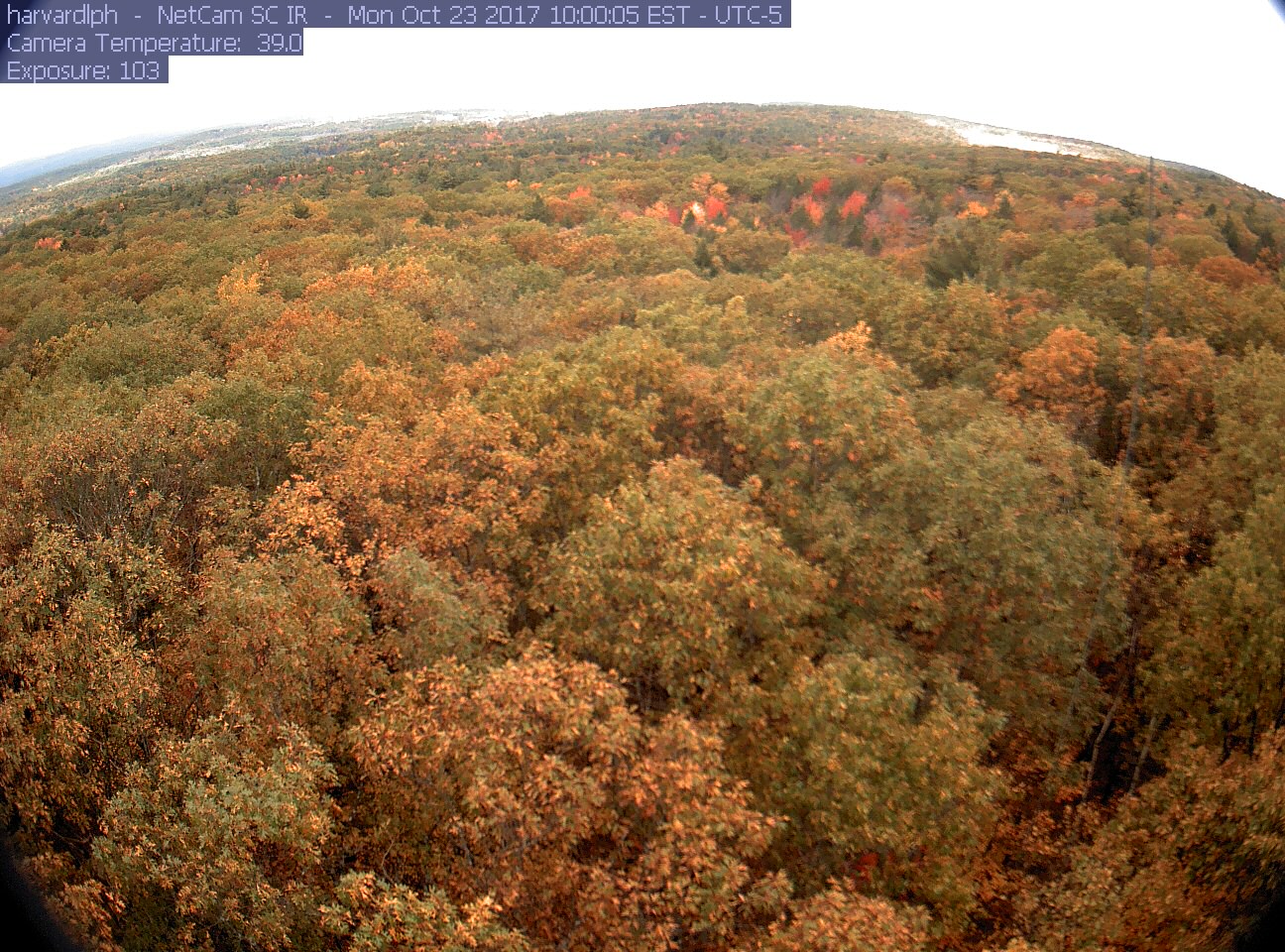
A study led by Harvard Forest Senior Ecologist Audrey Barker Plotkin sheds light on the factors affecting oak tree survival during regional outbreaks of spongy moth (Lymantria dispar), an invasive insect that can cause widespread oak mortality.
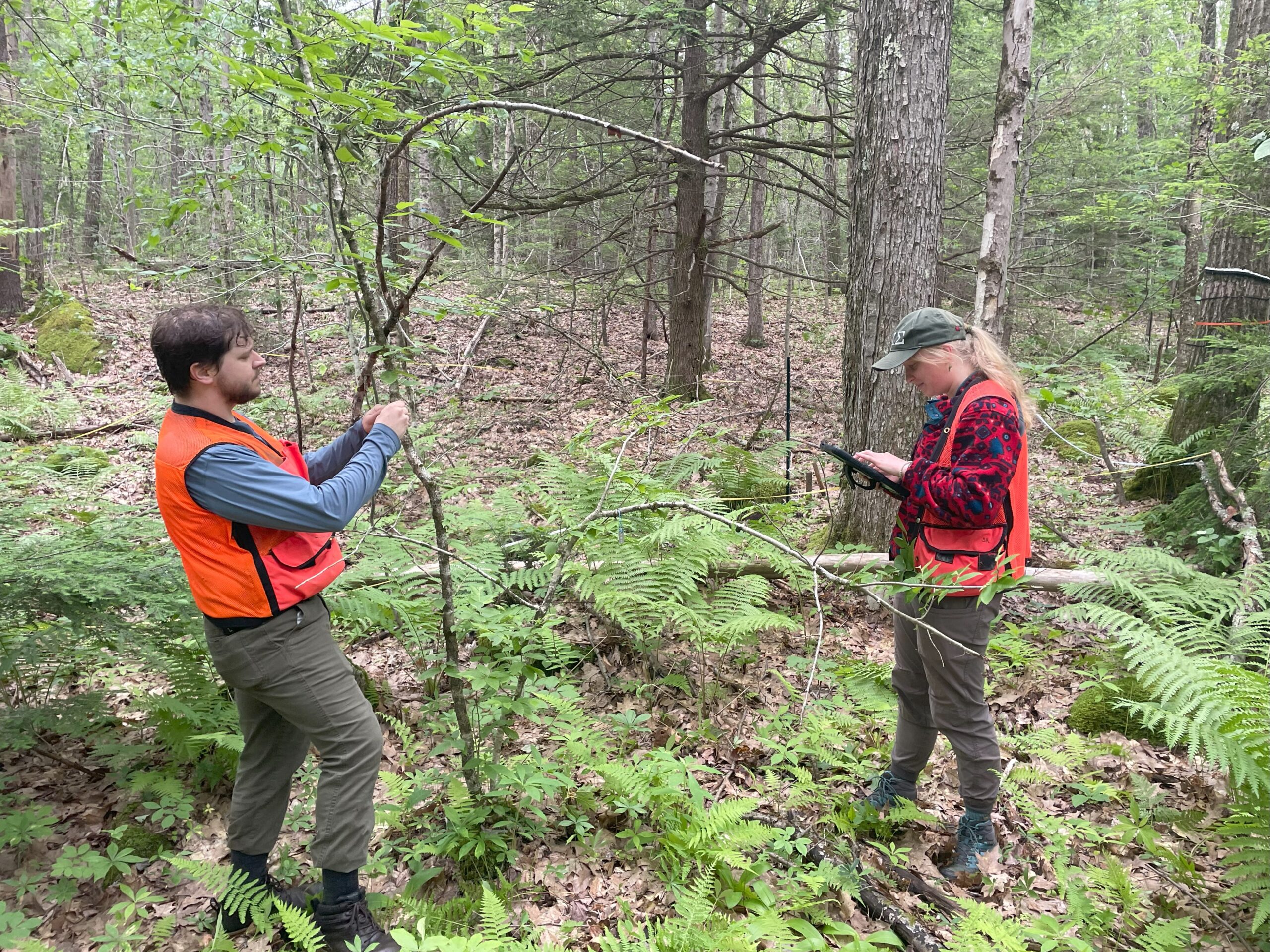
The authors tracked oak tree populations from 1970 to 2020 across a network of permanent study plots in central Massachusetts forests. The 50-year timespan of data collection meant they were able to contrast the short- and long-term effects of two major spongy moth outbreaks – one that peaked in in 1980–1981, and another that peaked in 2017.
Their results showed a greater loss of oak trees and carbon biomass during the 2010s outbreak than the 1980s outbreak. The average oak tree that died between 2010 and 2020 was larger and had more than twice as much biomass than the average oak tree that died between 1980 and 1990. The authors posited that water stress in the later outbreak may have been a factor in the increased mortality of large trees. Higher mortality risk was also associated with sites that experienced more years of local defoliation during the outbreaks.
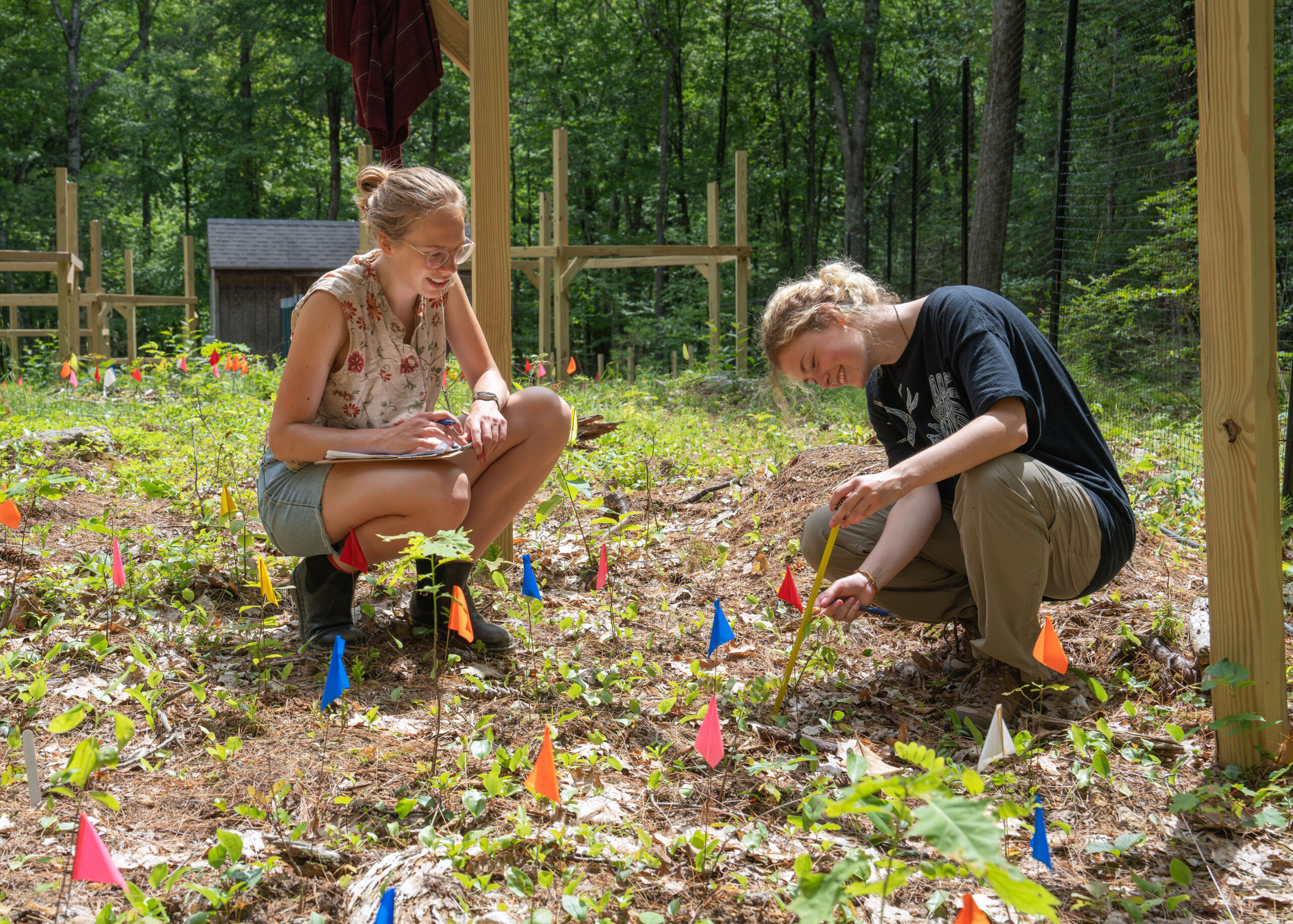
Despite major losses of oaks during the two spongy moth outbreaks, the relative abundance of oak in the study plots remained steady from 1970 to 2020, and the absolute amount of oak biomass nearly doubled. However, the survival of new oak seedlings declined over the 50-year study period and was much lower than for other tree species.
This work received funding from the National Science Foundation, both through the LTER program (NSF-DEB 1832210) and the REU program (NSF-DBI 1950364).
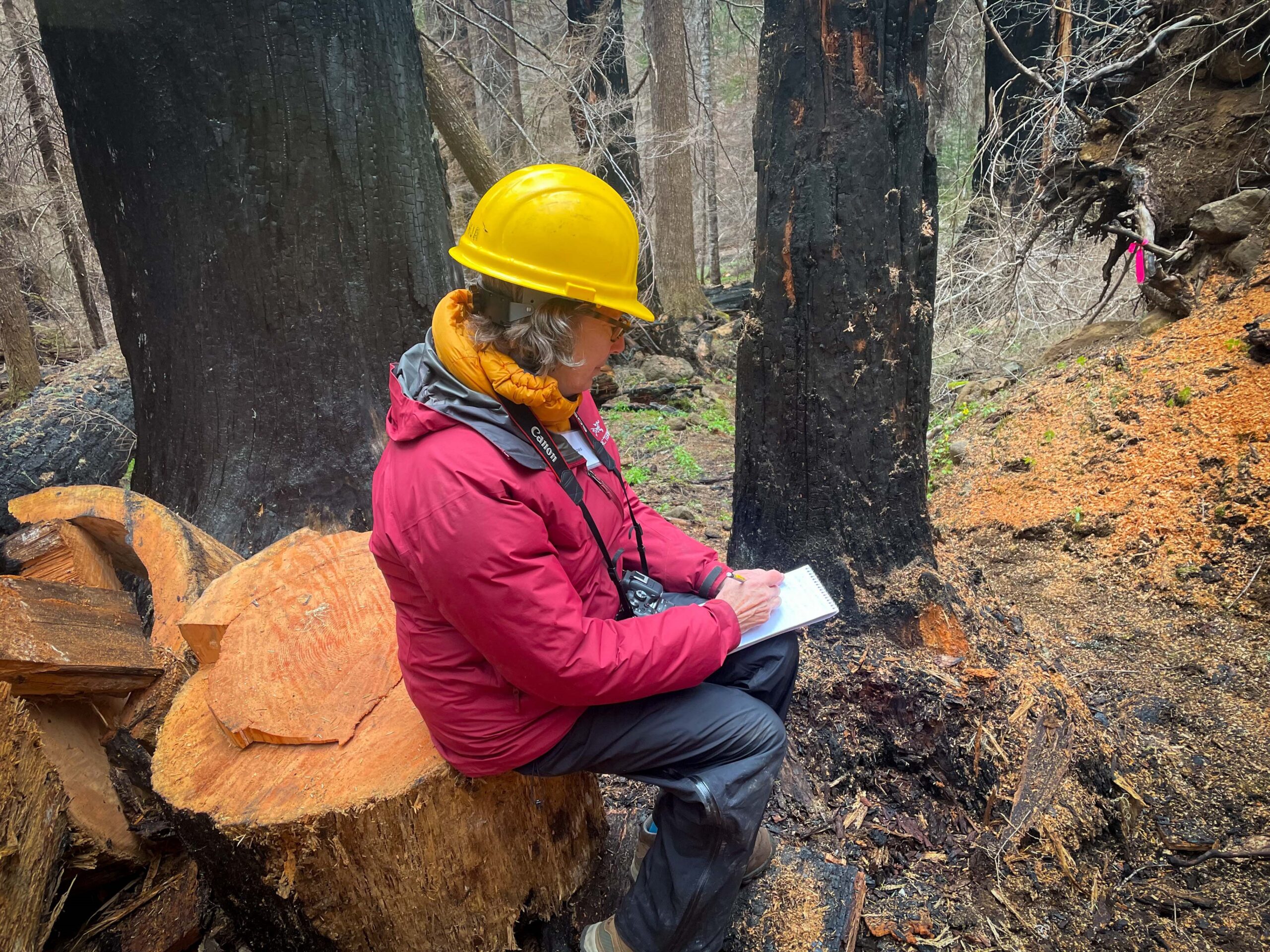
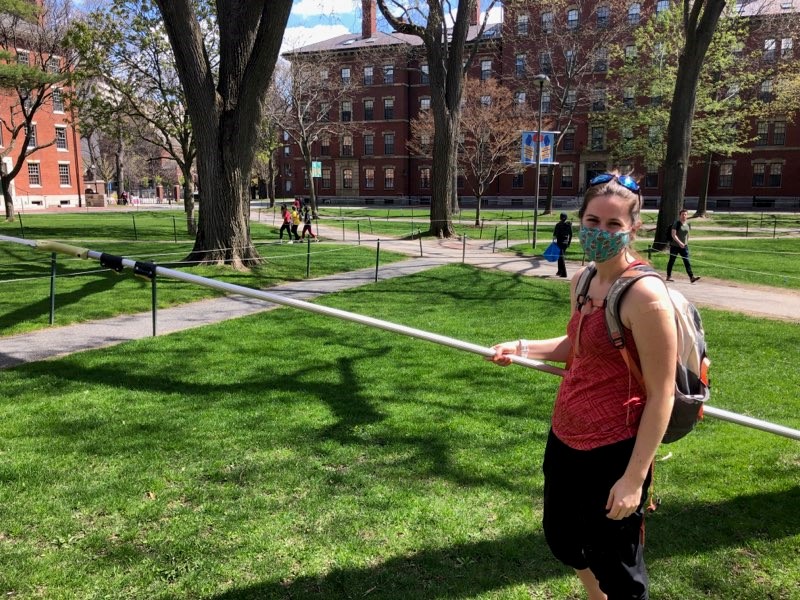
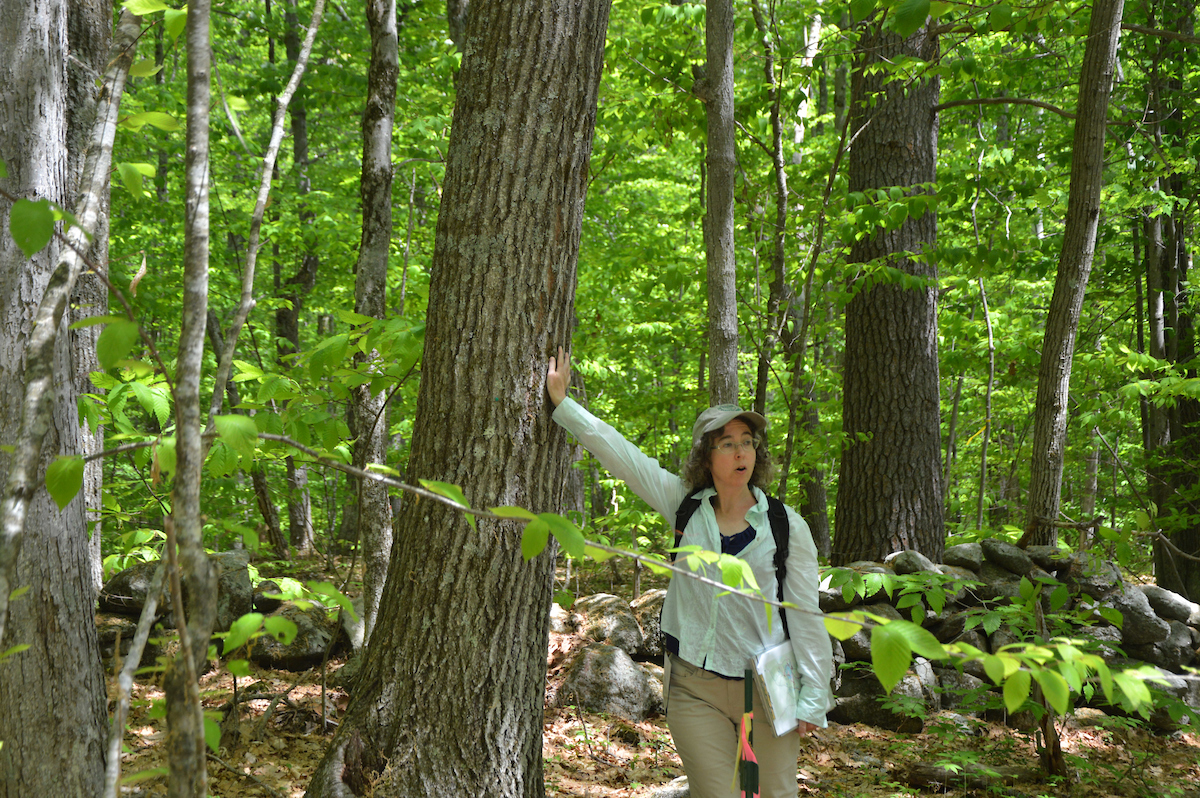
Photo of Audrey Barker Plotkin and an oak tree, by Jenny Meskauskas.