40-Year Study Reveals New Insights on Carbon

The middle-aged forests of the East Coast may not look like carbon-storing powerhouses. But New England forests take in enough carbon each year to offset nearly half the region’s household carbon dioxide emissions. A new study by HF ecologist Audrey Barker-Plotkin and Summer Research Program alumna Kate Eisen explores how trees are getting the job done.

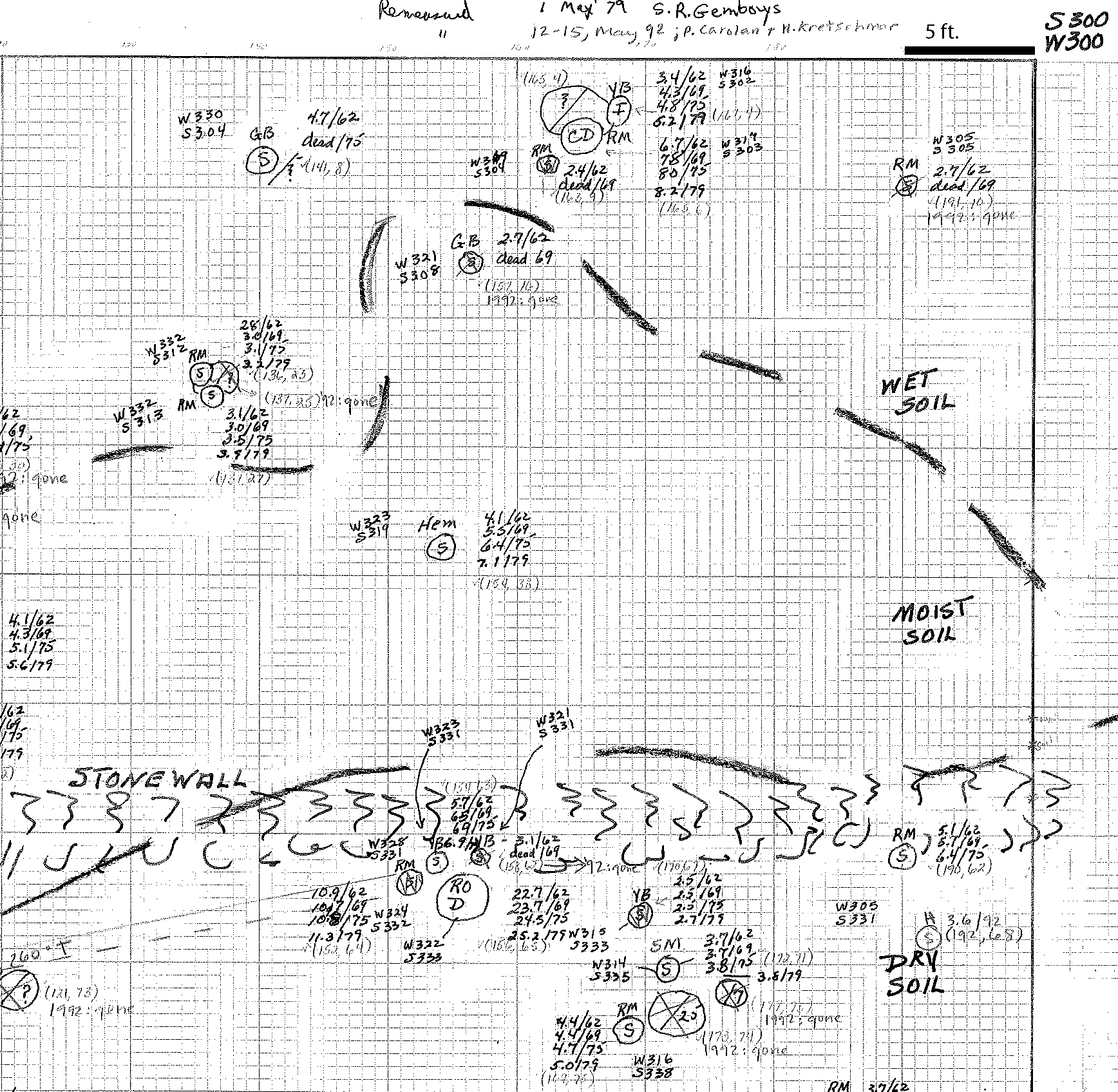
The study, published this month in the Journal of the Torrey Botanical Society, is a meticulous, 4-decade record of the growth of more than 6,000 individual trees. Today this forest is about 110 years old, and it has grown steadily over the past 42 years; biomass accumulation has not yet leveled off.

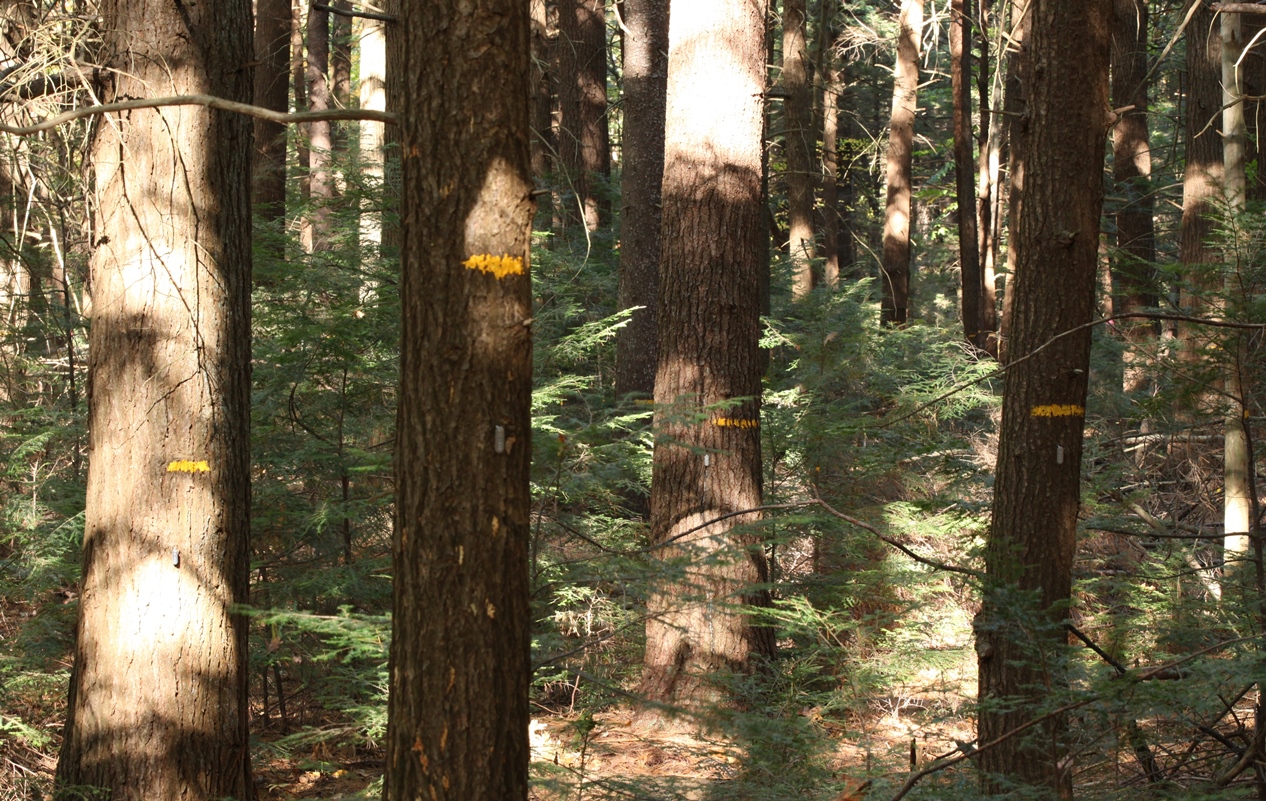
Measuring trees in the study area – a 7-acre stretch of woods dominated by red oak and red maple – takes a crew of several scientists about three weeks to complete. The plot has been re-measured 4 times since the initial census by soil scientist Walter Lyford in 1969.

Such a detailed, long-term study like this one is scientifically rare.

The research team is planning the next census for the plot’s 50th anniversary, in 2019.

(photo of Walter Lyford’s hand-drawn map courtesy of the Harvard Forest Archive)
New Study: Benefits of Carbon Emissions Standards

A new study in the journal Nature Climate Change shows that states can gain large clean air and public health benefits from power plant carbon standards. The paper, co-authored by Kathy Fallon Lambert, HF Science & Policy Integration Project Director, also documents how these added benefits depend entirely on critical policy choices that will be made by the Environmental Protection Agency in the final Clean Power Plan expected in July.

Lambert was joined in this research by colleagues from Syracuse University, Harvard T.H. Chan School of Public Health, Boston University School of Public Health, Resources for the Future, and Sonoma Technologies in a project convened by the Science Policy Exchange.

(Photo by David Foster)

Keystone Conservation Leaders Trained at Harvard Forest

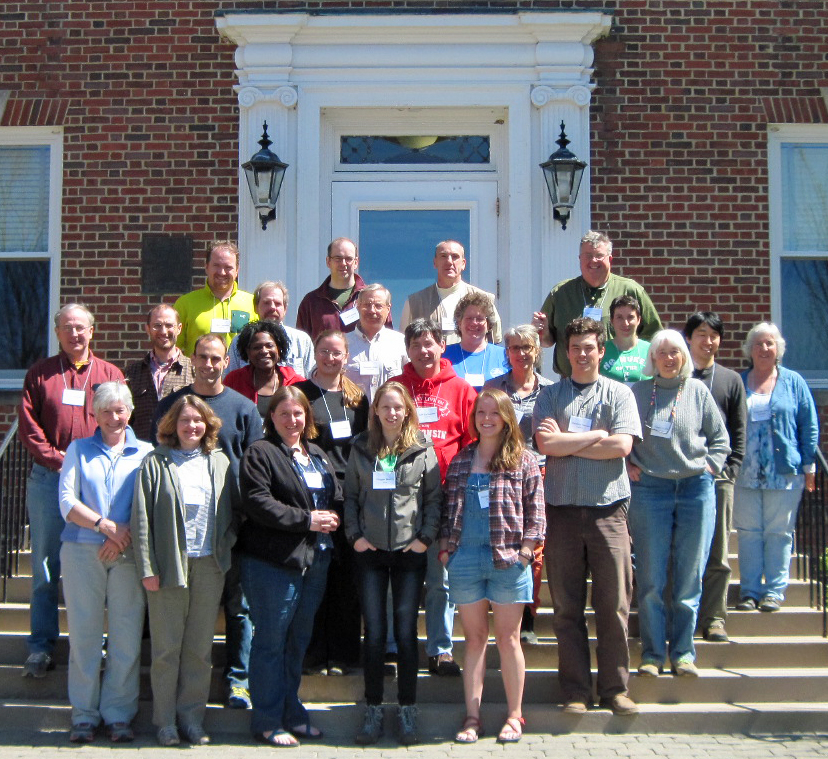
More than 450 Massachusetts community members have completed the 3-day training workshop for the Keystone Project, held each spring at the Harvard Forest. This month, a class of 24 joined their ranks.

In ecology, a keystone species is one whose impacts on its environment are larger and greater than would be expected from one species. The Keystone Project invests education and reference materials in “keystone” community members who can make a large impact at the local level. The training covers forest ecology and management, wildlife management, land protection, and community outreach. In exchange for the training and take-home resources, graduates of the program — called Cooperators — agree to return to their communities and volunteer at least 30 hours of their time towards projects that promote forest and wildlife conservation.

Over the past 25 years, the Keystone Project has trained over 450 community opinion leaders and landowners, who have collectively volunteered over 37,125 hours to conservation-related activities – the equivalent of 18 full-time conservation positions. They have reached 12,669 people and made 1,419 referrals to foresters, land trusts and other resources. Cooperators reported owning or being involved in the management decisions on 89,329 acres of land.

More than three-fourths of all the woodland in Massachusetts is owned by thousands of private families and individuals. Much of this land is at risk of conversion to developed uses. Programs like Keystone bring woodland owners and communities the skills and information to make a difference at the local level.

The Keystone Project is organized by the University of Massachusetts Department of Environmental Conservation and UMass Extension, with funding support from the Harvard Forest, Mass. DCR, and the Mass. Chapter of The Nature Conservancy.

(Photo by David Kittredge)

Sensor Networks and the Arrival of Spring

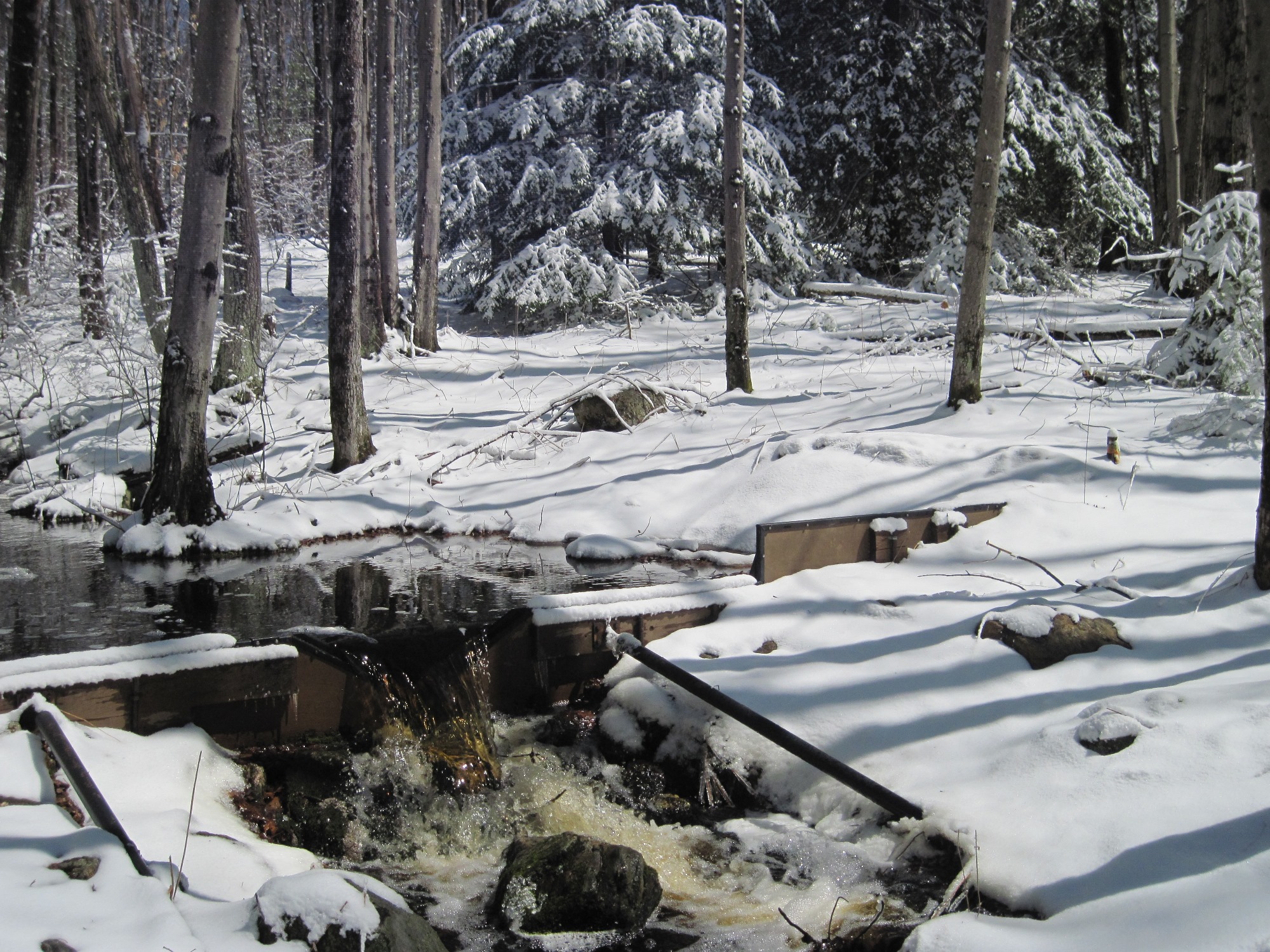
The field wireless network at Harvard Forest was recently expanded to enable (near-) real-time data from four stream gages, two wetland gages, and a snow pillow. Data from these stations and the Fisher Meteorological Station are collected, processed, and uploaded to our website every 15 minutes along with 30-day graphs of selected variables. The graphs, which contain about 3,000 data points for each variable, reveal a physical environment that is in constant flux, with variations on daily, synoptic, and seasonal time scales.

These variations are particularly striking in spring. In addition to longer days and (generally) warmer air temperatures, the melting of the snowpack can lead to abrupt changes, including an increase in soil temperature (as sunlight reaches the soil), net radiation (as the ground absorbs more of the sun’s energy), and water temperature (as snowmelt declines and the soil warms), as well as pulses in stream discharge and wetland water levels (as water stored in the snowpack is released). As minimum air temperatures rise above freezing, daily fluctuations in stream flow and wetland water levels may be seen as first conifers and then hardwoods begin to transpire. Changes in plant phenology, soon to follow, will be captured by the Harvard Forest webcams.

Bullard Spotlight: Wyatt Oswald on Reconstructing Past Environmental Change

Bullard Fellow Wyatt Oswald, an Associate Professor of Science at Emerson College in Boston, has been affiliated with the Harvard Forest for more than a decade. Working closely with Harvard Forest collaborators David Foster and Elaine Doughty, he analyzes lake-sediment cores to reconstruct past environmental changes.

 During his Bullard Fellowship, Oswald has synthesized various types of paleoecological data from Cape Cod and the adjacent islands to study long-term changes in climate, vegetation, and fire. He chose to work at Harvard Forest for its “outstanding facilities and a strong tradition of using retrospective ecology to understand forest dynamics and inform conservation, management, and policy.”

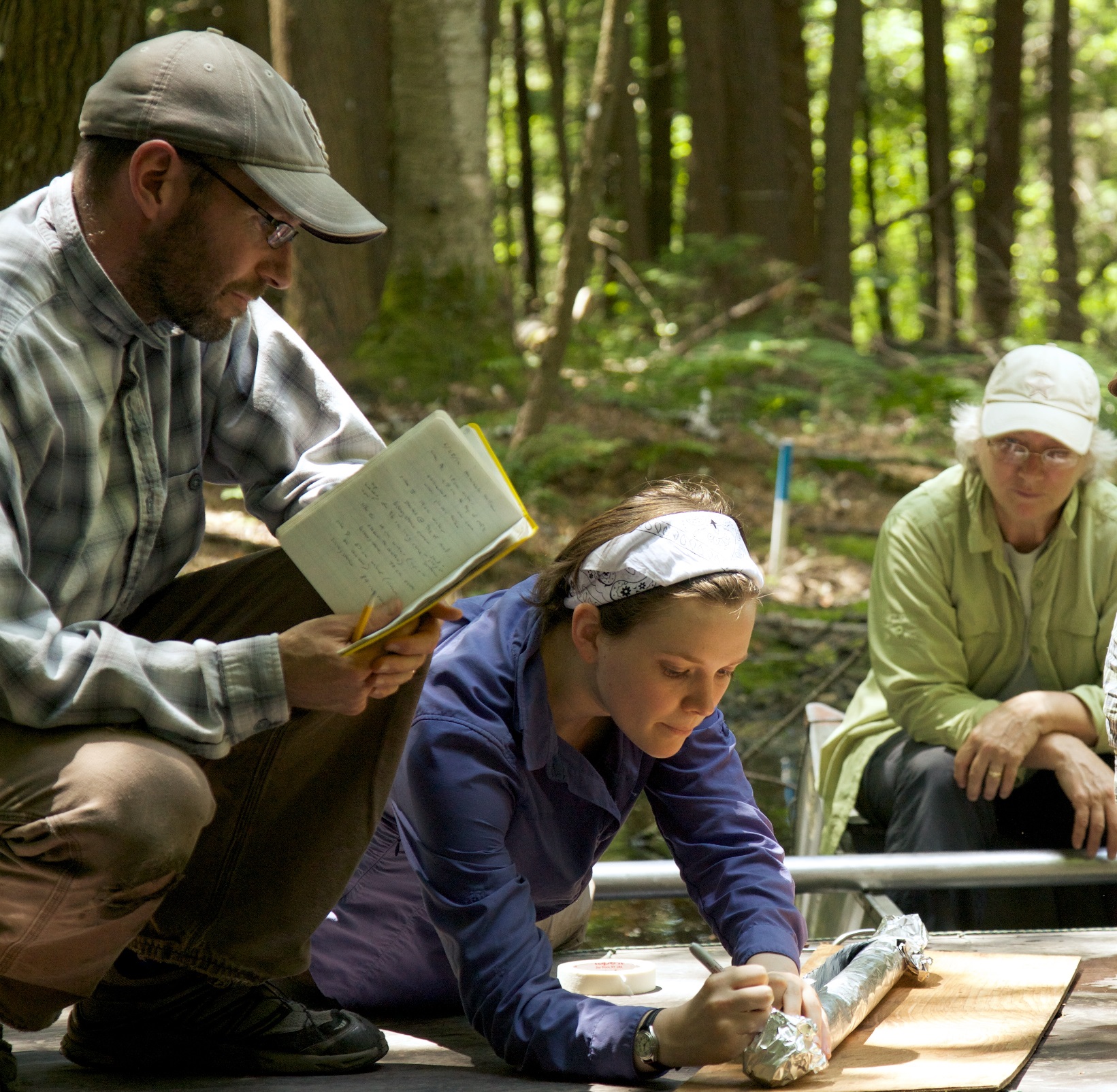
Photo by David Foster: Oswald and summer research student Lindsay Day label a sediment core collected from Hemlock Hollow on Prospect Hill.

International Scholars in Residence at Harvard Forest

In April, 4 international visitors from 3 continents arrived to conduct research at the Forest in collaboration with HF ecologists Aaron Ellison and Audrey Barker-Plotkin, and Director of Conservation Innovation, Jim Levitt.

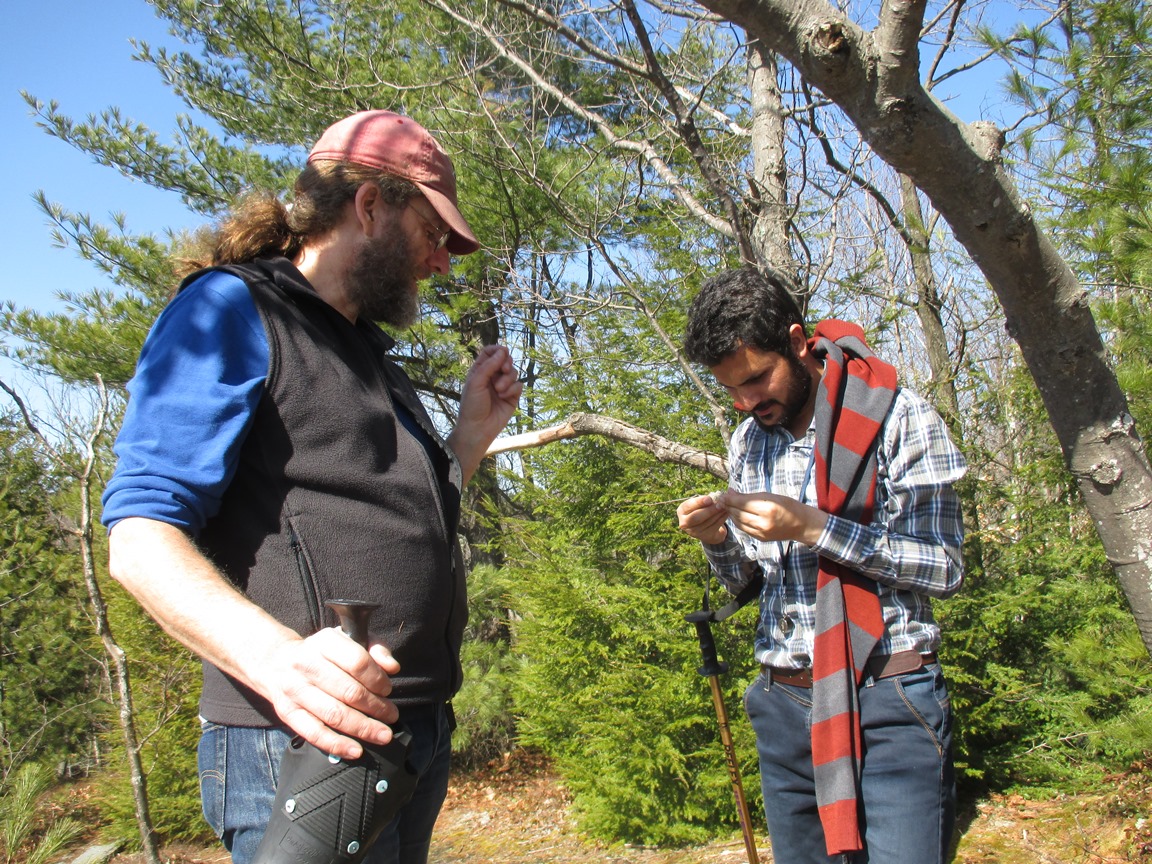
Visitor Shah Khalid studies and teaches Botany at Islamia College in Peshawar, Pakistan. He was awarded a scholarship from the Higher Education Commission of Pakistan to support his Harvard Forest study of the dynamics of understory vegetation in declining hemlock forests. He will also pursue studies of statistical techniques used in analyzing plant community ecology.

Rogerio and Amelia Silva are visiting the Forest from the Museu Paraense Emílio Goeldi in Belém, Brazil. Their work will focus on comparative studies of ecological traits between tropical and temperate ants in the genera Stigmatomma and Cyphomyrmex.

Geoff Wescott is an Associate Professor in environment policy, planning and management at Deakin University in Melbourne, Australia. At Harvard Forest he’ll study large landscape scale conservation networks (like the Forest’s Wildlands and Woodlands initiative) in association with the Lincoln Institute of Land Policy.

HF Director to Address Forest Futures at Regional Symposium

On March 26, HF Director David Foster will join other noted scientists to discuss “Climate Change and the Future of Plant Life” in a regional symposium hosted by the New England Wild Flower Society.

Speakers will present a new report on the state of New England’s plants; information on climate-induced species adaptation, migration, and loss; and strategies for conserving and managing plant species and natural communities in the face of climate change. 

Harvard's 'Wired' Forest Featured

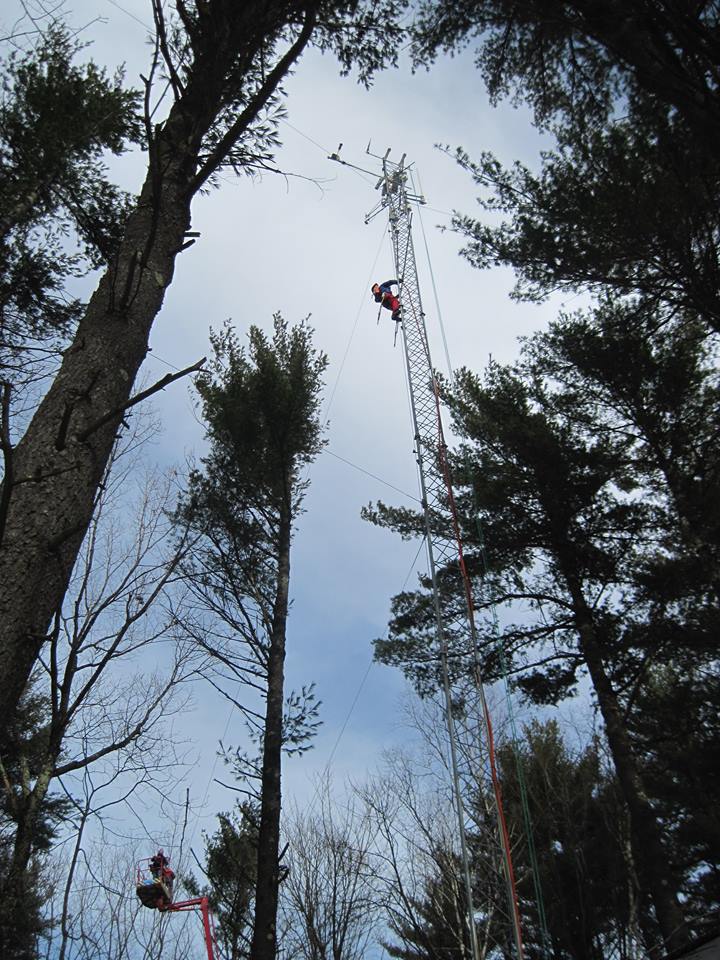
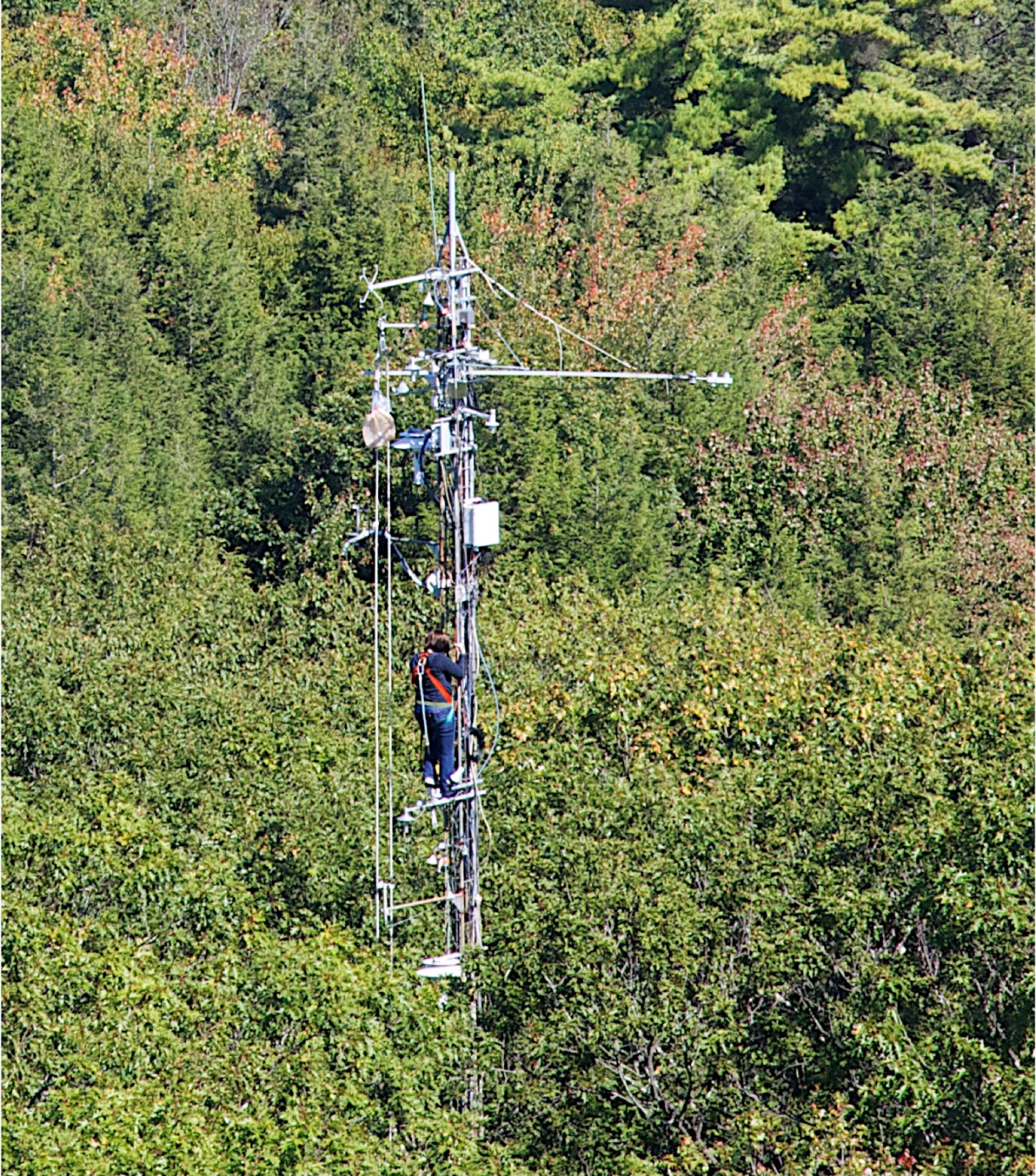
The latest issue of IEEE Spectrum Magazine features, in layman’s terms, the ins and outs of Harvard Forest’s high-tech research infrastructure. Describing our myriad long-term ecological research experiments, writer Mark Harris quips, “If a tree falls in the Harvard Forest, rest assured that a gadget is positioned to hear it.”

(Photo of Andrew Richardson/real-time-data-graphs climbing the barn tower, by Clarisse Hart)

'Scenarios to Simulation' Workshop Explores Regional Landscape Change

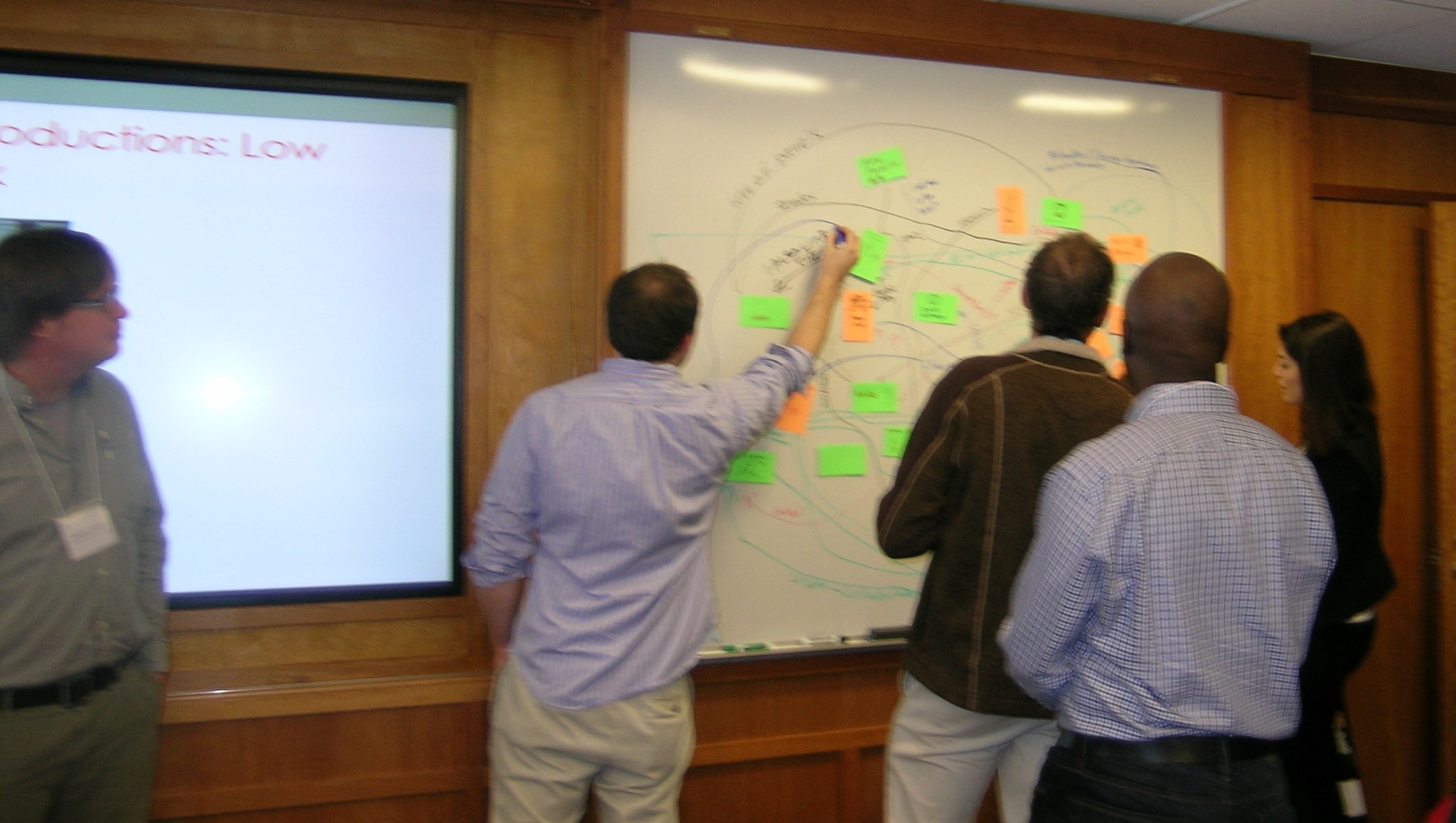
Last month, as part of the Scenarios, Services, and Society Research Coordination Network (S3 RCN), the Harvard Forest and the Science Policy Exchange collaborated with Dartmouth College to help convene a unique land-change workshop, “Scenarios to Simulations.”

The workshop brought together academics to explore scientific methods for translating narrative scenarios of future landscape change into numeric estimates. Their work will inform complex simulation models that ultimately will explore the consequences of sustainable futures for the New England landscape.

Kathy Fallon Lambert, Director of the Harvard Forest’s Science & Policy Integration Project and the Science Policy Exchange, is the S3 RCN Principal Investigator. S3 RCN landscape modeling efforts are led by Harvard Forest senior ecologist Jonathan Thompson.

The S3 RCN is funded by a grant from the National Science Foundation.

New Study: A Carbon Surprise in Old-Growth Forests

Most forests in the eastern U.S. are young and growing fast. A new study published this week in the journal Ecology  shows the potential for younger forests to maintain their valuable carbon ‘sink’ capacity for many decades to come — but not in the way you might expect.

To explore the potential for young forests to store carbon over time, HF ecologist Jonathan Thompson, along with his graduate student Jennifer McGarvey and colleagues from the University of Virginia, looked instead at old forests. They measured carbon in the scattered fragments of remaining old-growth forest throughout the mid-Atlantic states, hoping to determine the upper limit of how much carbon a forest can store.

They found that the old-growth forests store 30% more carbon than surrounding younger forests. And a striking amount of that carbon is found in dead wood – in downed logs and standing snags. In fact, there was eighteen times more carbon stored in dead wood in the old-growth stands (almost 20% of the total carbon stored) than in the younger stands.

They found that tree species matters, too. Stands dominated by tulip poplar (Liriodendron tulipifera) store the most live biomass, while stands of mixed oak (Quercus spp.) store more dead wood.

The scientists note that today’s younger forests will likely have a different trajectory than today’s old-growth forests. These young stands originated in abandoned agriculture fields, and have not had time to build up generations of dead wood stores. But tree pests and pathogens, such as the hemlock woolly adelgid, may accelerate the build-up of the dead wood pool, leading to more carbon storage over time.

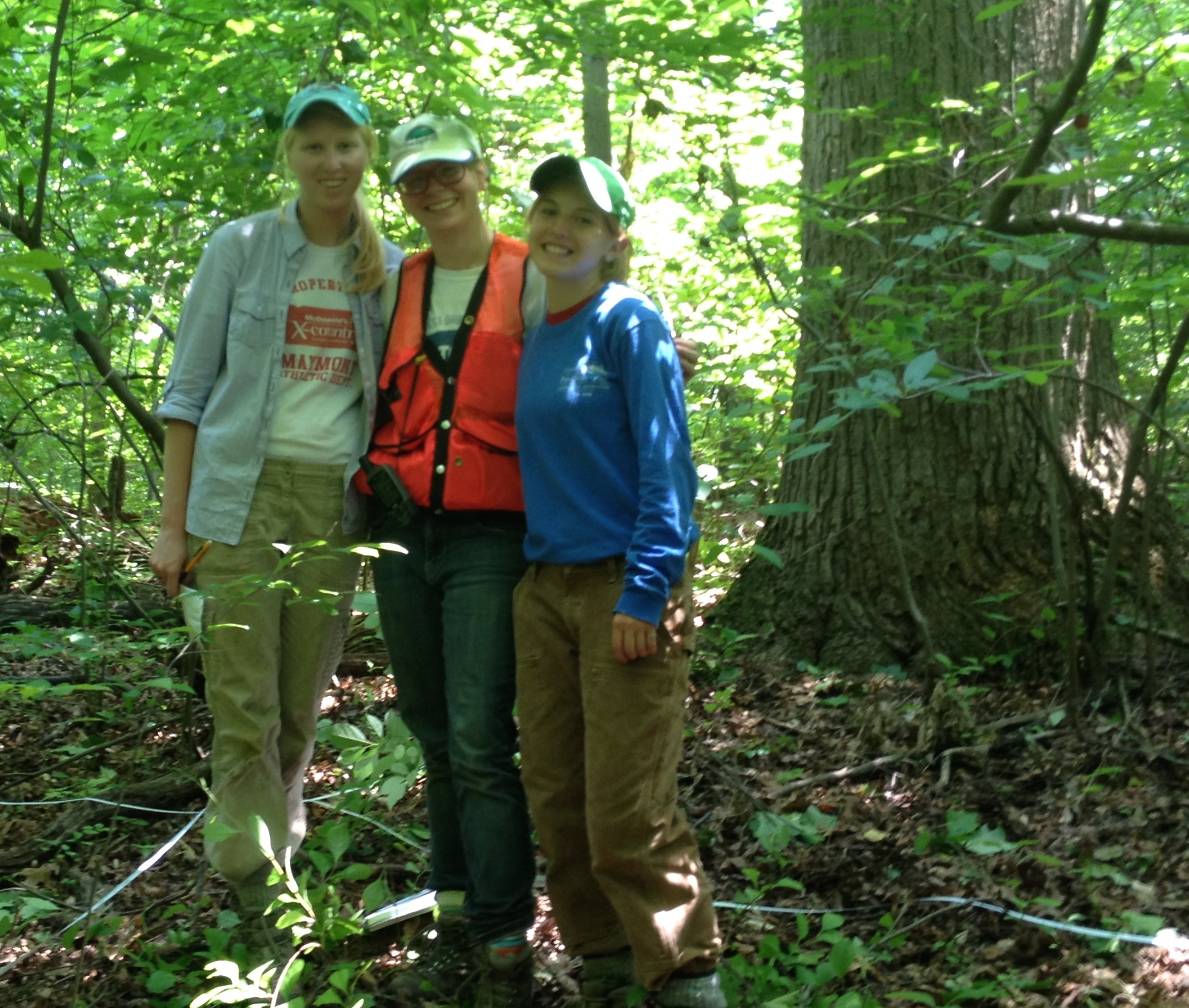
(Photo: Rebecca Walker, Jennifer McGarvey, and Stevie Gildehaus measure old growth carbon stores at Belt Woods near Annapolis MD. Photo by Jonathan Thompson.)

Bullard Spotlight: Hannah Buckley and Bradley Case on Forest Spatial Patterns

Our Charles Bullard Fellowship Program draws scholars from around the globe. This year, Hannah Buckley and Bradley Case from New Zealand’s Lincoln University are at the Forest working toward a better understanding of the links between forest spatial patterns and processes.

In collaboration with HF senior ecologist Aaron Ellison, they are using new methods in spatial pattern analysis to explore a global range of large, fully-censused forest plots within the ForestGEO network (including an 85-acre plot right here at the Forest). Their particular interest is in understanding what drives spatial patterns of species co-occurrence and population structure, and how environmental variation modifies these relationships.  They are also exploring how these pattern-process relationships change across the temperate-tropical gradient.

Meticulous forest datasets and opportunities for collaboration are what brought Buckley and Case to the Forest this year. They note: “Harvard Forest has provided a great environment for exploring our research interests because we have access to high-quality forest plot datasets as well as the opportunity to establish productive collaborations with experts in the field.”

(Photo of our ForestGEO plot by David Foster.)

2015 Harvard Forest Ecology Symposium

The 26th annual Harvard Forest Ecology Symposium will be held Tuesday, March 17th from 9:00 a.m. to 5:00 p.m. 

Registration is closed, but you can live-stream the talks on Tuesday.

Talks this year will focus on the Harvard Forest Long-Term Ecological Research (LTER) program – long-term trajectories and new results. 

Please note that LTER graduate students and post-doctoral fellows attending the Symposium are invited to dinner following the event. Email hart3@fas.harvard.edu to RSVP. 

  • Program
  • Collaborators: Submit a research or poster abstract